The wines of Sicily – a wine region like no other

The fishing village of Scoglitti which believe it or not triggered my passion for Sicilian wines

Maybe it is because of Malta’s close affinity to Sicily, or because of the fact that I have been there so many times, but I find Sicilian wines to be extremely interesting. True, they might not compare with the finesse of Barolo’s from Piemonte or Brunello di Montalcino from Tuscany but still they are extremely fascinating.

Sicilian cuisine to me epitomises what is best about Mediterranean food. Take simple, sometimes humble ingredients and within minutes you have the makings of a great meal. Like my home country, Sicily is a hotpot of different influences from the Mediterranean. Some of the most memorable meals I have experienced were in Sicily whether it was a menu free restaurant in Scoglitti serving just one fish dish after another of what their fishermen had caught earlier in the day, to some of the best pasta creations. Nothing beats their spaghetti with sea urchins or pasta with prawns and pine nuts or pistachios which are so common in Sicilian cuisine.

But this post is not about Sicilian food but rather about its wines. Sicily came rather late to the wine connoisseurs attention and for various reasons. For many years, Sicilian wine producers made wine which were transported to the North of Italy to be blended with other more well known wines. There were also a few large producers who mainly focused on quantity rather than quality.

But a handful of winemakers, also spotting the potential of this island, decided to take matters into their hands starting from the 1990s and began to make their own wines under their own labels. This has led to a major reversal of fortunes and many now consider Sicily to be one of the most interesting wine regions in Italy.

Some winemakers like Cusumano call Sicily a continent because of so many terroirs that this island has to offer. The variety of wine styles that have emerged in recent years ensures that this may indeed be the case.

There are parts of Sicily which are further South from Tunisia and therefore extremely hot for wine making. Nevertheless, the wines produced, despite their intensity also have the right amount of acidity which makes for balanced wines when aged well. I can assure you that a 10 year old Nero d’Avola can give you as much pleasure as more renowned wines.

The Nero d’ Avola is the most well-known grape from Sicily and it originally comes from South-East Sicily (Avola) close to Pachino which is world famous for the cherry tomato variety of that name. Nowadays, Nero D’Avola is grown pretty much across the whole island.

Then there are wines from higher altitudes or those from the volcanic region of Etna which offer great examples of the potential that wines from volcanic regions have. Here, the most interesting grape is the Nerello Mascalese which is traditionally grown on the slopes of Mount Etna. The wines from the Etna have an exceptional minerality mainly because of the volcanic soil.  One of my long time favourites from this area are the wines from the long established Benanti. Many Sicilian wine makers have now invested in this area including Tasca d’Almerita, Cusumano and Firriato. One of the most innovative in the Etna region is Belgian winemaker Frank Cornelissen who has established himself with his natural wines which use no sulphur whatsoever. His are considered to be cult wines.

The main white grape variety of Sicily is the Insolia which is a very fruity wine but when well made has great balance in terms of fruit and acidity. It also blends well with international varieties such as Chardonnay.

The first time I discovered Sicilian wines was thanks to a passionate wine lover who had a great Enoteca in the small fishing village of Scoglitti. He had a small but very interesting selection of wines in his enoteca. He guided me years ago to some of the best winemakers the island had. My fascination with Sicilian wines grew from there.

Among my favourite winemakers are Benanti, Cusumano, Morgante, Firriato, Tasca d’Almerita, Ceuso and Planeta. I will write about these and many more wine producers in future blogposts. There are many other winemakers worthy of a mention. So watch this space for more blogposts in future.

But if you find any one of the Sicilian wines from the above producers try them out. You will not be disappointed. One tip: Sicilian wines in comparison to wines of similar quality are cheaper so I would recommend that you try to acquire the higher end wines. You can find exceptional quality for wines between 10 Euros and 30 Euros.

Among my long time favourites are Cusumano’s Noa, a blend of Nero d’Avola, Cabernet Sauvignon and Merlot, Cusumano’s Sagana, 100 per cent Nero d’Avola, Rosso del Conte from Tasca d’Almerita, the Nero d’Avola from Morgante, Harmonium from Firriato and the Pietramarina from Benanti.

Siciliy is also home to one of my favourite ever wine shops, the Enoteca Picone. It has an amazing selection of wines from Sicily as well as many of the best Italian wines you can find elsewhere. If you are ever in Palermo, then this is a must visit.


Winehouse Osteria – a taste of Italy in the heart of Brussels

20140712-225353-82433023.jpg
The cosy Winehouse Osteria close to Place St Gery in central Brussels

It is with a certain amount of trepidation that I recommend and then test a place with friends particularly if it is relatively new and has very little reviews. But like the best secrets in life, word of mouth is normally a sure bet even if there is always that expectation that something might go wrong.

I came across Winehouse Osteria thanks to recommendations from some friends after I wrote about Caffe al Dente in Uccle. This place just off the Place St Gery area is quite a find. Part wine shop, part coffee shop, part Osteria, the restaurant is extremely small and cosy but worth a visit.

If you are nostalgic about Italy or craving for an Italian experience, then this will not disappoint you. Forget for a while that you are in central Brussels and this osteria/enoteca could easily be in a small beautiful village somewhere in Italy.

The wine list is interesting and reasonably priced. You will find many bottles below 20 Euros which is not common in Brussels with a great selection of wines in the 20 Euros to 35 Euros range (a common price for entry level wines in most restaurants in Brussels). If you decide to just take home some wines, then the price is also listed on the wine list and considerably cheaper. Italy is well covered. Just to give you an example, I even found a wine from Liguria which is not a common sight on wine lists outside this region.

They had a number of wines from the wine list missing when we went, but their recommendations as a replacement were spot-on.

Winehouse Osteria also has a great selection of wines by the glass. The prosecco to start with was creamy and excellent. They also serve Aperol Spritz for those nostalgic about the ‘aperitivo’ in Italy.

The beauty about this place is that you can visit at any time between 7.45am and late in the evening. You can just go for a coffee in the morning, lunch or dinner in the evening or even a glass of wine at any time.

20140712-225354-82434004.jpg
The aubergine parmigiana and the zucchini parmigiana. Both perfectly done.

This is not your normal Italian restaurant. You will not find pizza or pasta dishes (except for their lasagna). But the food menu is interesting. Apart from cheese and salumi platters there is a small range of interesting dishes. When we went we tried a carpaccio of beef (excellent), a cheese and salumi platter (very good) and grilled peppers. The parmigiana of aubergine was exceptional as was the one made with zucchini. I had the involtini of chicken with guanciale and scamorza seres with a grilled scamorza and tomato sauce and peas. The polenta dish with a cheese, confit onion and lemon was also an excellent combination of flavours.

It was obvious when we were there that the people running Winehouse Osteria are passionate about what they are doing even if they seem to be working miracles form their tiny kitchen which serves this small osteria.

If there was point to criticise it was their desserts. The tiramisu was good but not exceptional and the ice-cream seemed like it was a supermarket ice-cream.

Price for central Brussels is also very reasonable. We paid around 35 Euros per person for an aperitivo, starter, main course and dessert. This is a place to visit if you like wine and want something different in central Brussels.

Verdict: Amid many tourist traps in central Brussels this is worthy of a visit, even for those like us who rarely venture to this side of town to dine. The target audience is clearly locals given most tourists may be tempted to try something more traditionally Belgian in the centre. Nevertheless, if you are craving for comfort food, want to share a glass of wine with friends over a nice cheese or salumi platter or fancy some comfort food, I am sure you will not be disappointed.

Winehouse Osteria: Rue de la Grand Ile, 42, Brussels. Open everyday from 7.45am to 11pm.


Liguria (2) Camogli – one of the most charming fishing villages

IMG_4626
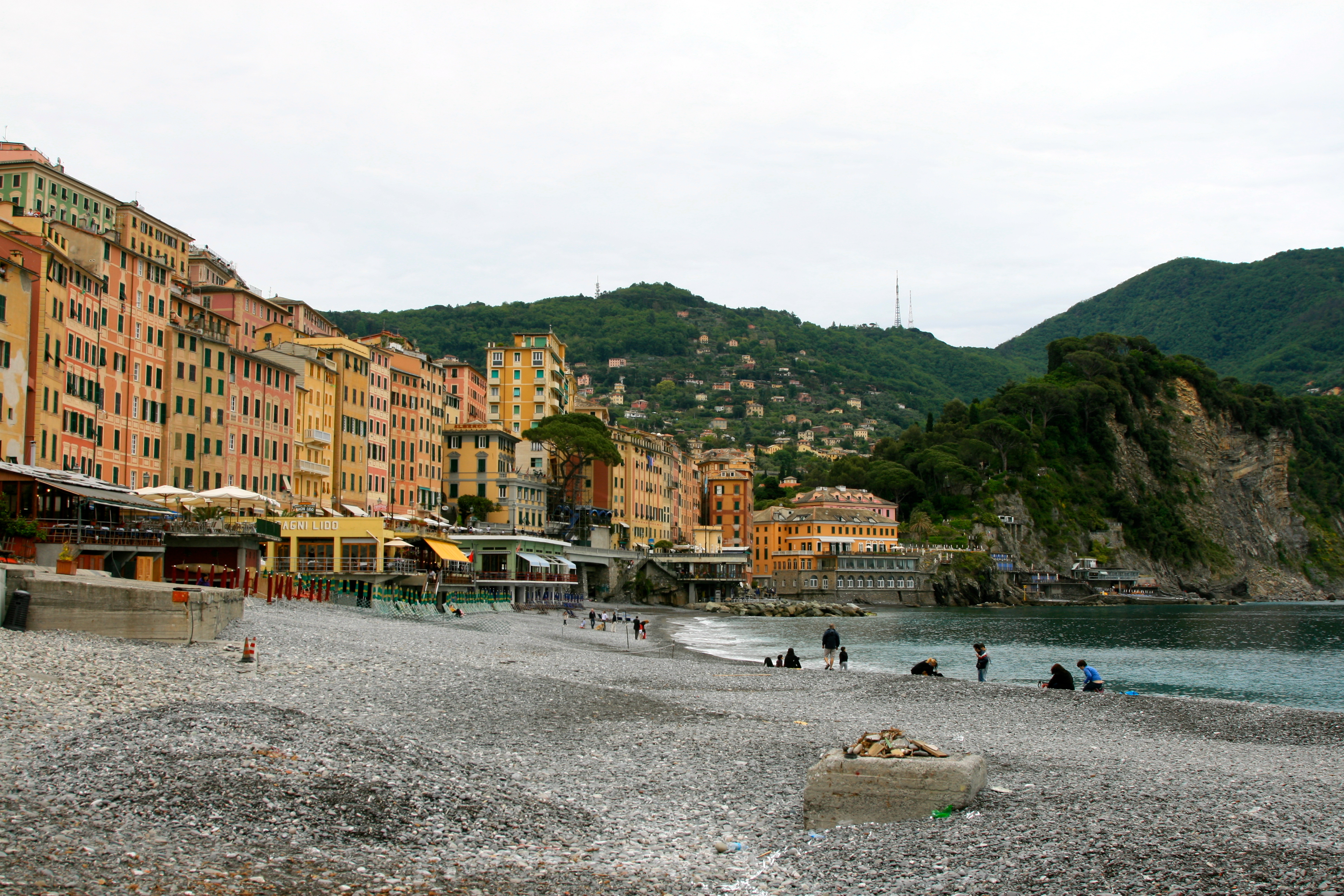
The view of Camogli – a charming fishing village

The first time we visited Camogli, we missed this fishing village, it is so hidden. The GPS in my car, normally reliable, took us to a hill whereby we could observe a superb view of Camogli and the Ligurian coast but couldn’t spot the way to get there.

After some time driving around we finally discovered that we needed to take a narrow street down towards the village centre. What we then discovered was amazing. Parking may be difficult depending on the time of year you visit but don’t be discouraged. It is really worth your time.

Camogli (Camuggi in Genoese dialect) is a small Italian fishing village and tourist resort located on the west side of the peninsula of Portofino, on the Golfo Paradiso at the Riviera di Levante, south from Genova. The name means “house of wives” ( casa delle Mogli ).

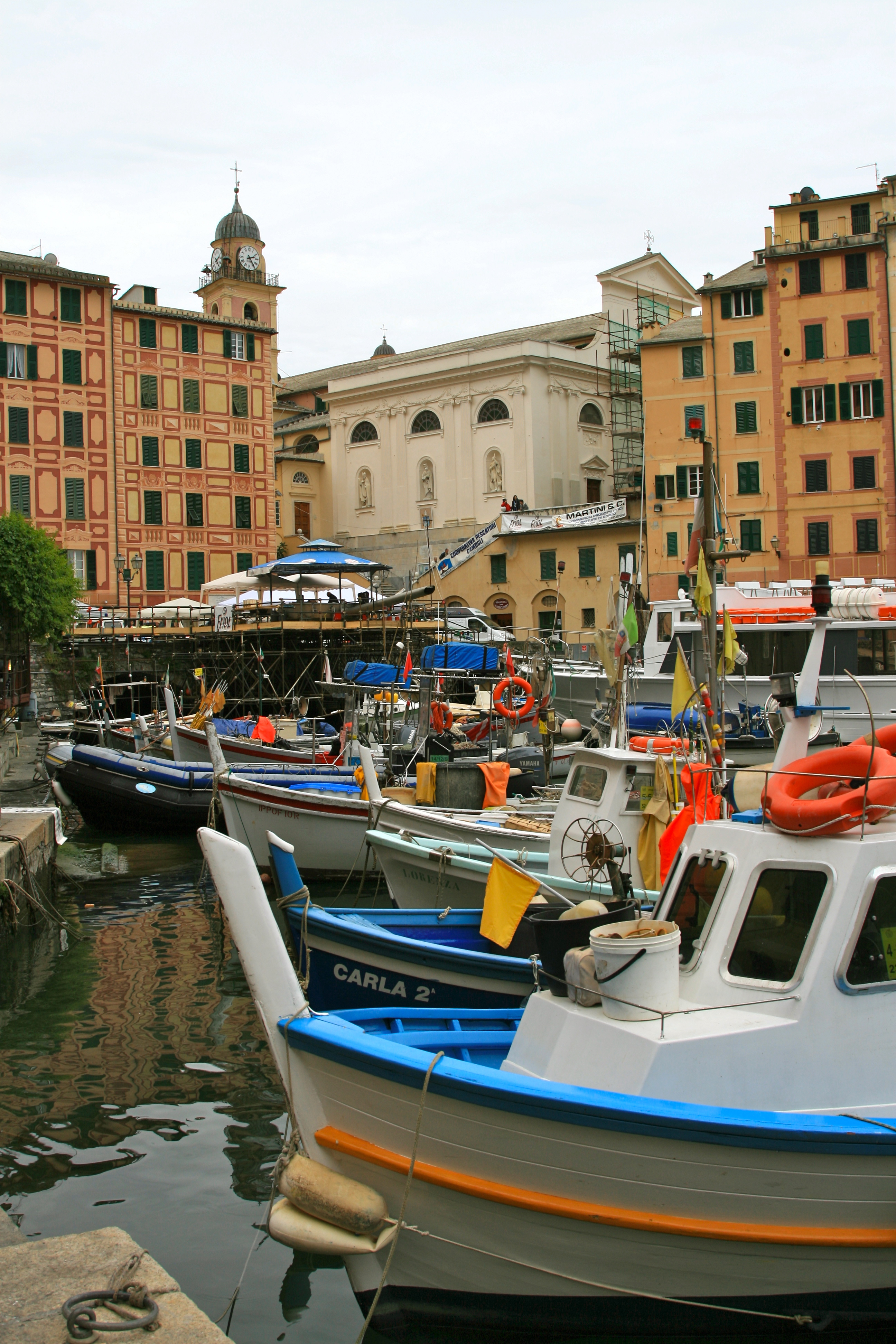
We visited Camogli twice in May and another time in June. Both times the weather was great so people were eating out in the terraces with a splendid view either of the coastline or the tiny but colourful fishing village which bustles with activity. It is said that the fishermen of the village painted the houses in this manner to ensure that they could spot it when they were returning back to the port after their fishing trips. This makes for a great vista as you can see from the photos.

IMG_4649The maritime museum is also worth visiting though not easy to find. For a Maltese, this museum is special because it has paintings of a well known marine artist Nicola Cammillieri, active during the first half of the 19th century who painted beautiful ship portraits both entering the Maltese Grand Harbour as well as in other Mediterranean ports. There are a number of Camilleri’s paintings in the museum, many donated by families from Camogli and most of these are in excellent condition.

Where to eat: Just like in most places in Liguria you will find many Focacceria’s in Camogli. We tried Vento Ariel which overlooks the harbour. The food here was excellent. The menu changes according to the season so you are bound to experience different dishes whenever you go. The children devoured the Ligurian pasta (trofie) with freshly made pesto and I still remember a pate made with cuttlefish and anchovies which are a speciality of the region and the restaurant. The pasta with seafood and fresh fish were also extremely good as was the wine we drank from Azienda Agricola Pino Gino.

Semmu Friti, on the way down to the fishing village is a small takeaway serving, as the name suggests, typical Ligurian deep fried dishes. Here you will find delicious frittelle di baccala, stuffed anchovies and even the traditional ‘farinata’ made with chickpea flour. The deep-fried calamari is also exceptional.

Xodo is another good restaurant and bar serving typical dishes. This is an inexpensive restaurant which is normally packed. On a nice day, you eat outside overlooking the beach. The deep-fried anchovies as starter were excellent as was the fresh seafood black ravioli (using squid ink),

What to do: Just stroll around the seafront, visit the touristic boutique shops and sit and enjoy the sun. Visit the Maritime Museum. Walk on the pebbled beach or take a boat ride to neighbouring Portofino or San Fruttuoso, the latter only reachable by sea. In a recent article in the FT food and drink section Ruth Rogers of the River Cafe mentioned da Laura, on the beach of San Fruttuoso as one of her favourite restaurants in the world. Clearly something to remember for my next visit to Liguria.


IMG_4623
The colourful fishing port
IMG_4620
The view from the hill overlooking Camogli

IMG_4655 IMG_4644

Sestri Levante – a gem of a town in Liguria

IMG_4393
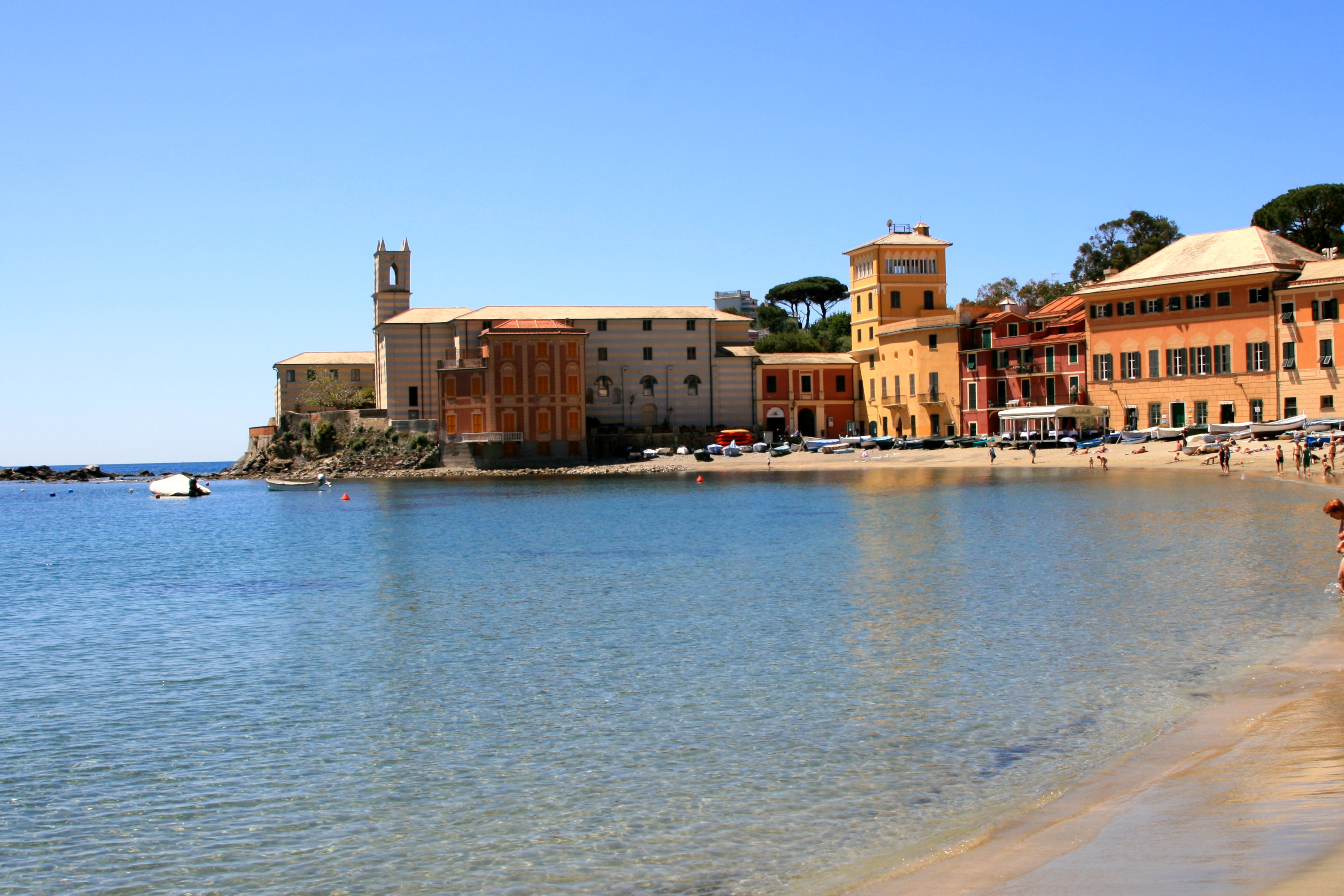
Baia del Silenzio

Liguria has undoubtedly become one of our favourite regions if not the top destination. There is so much going for the region, it is by the sea, it has a stunning landscape, picturesque towns and seaside villages, fantastic cuisine and also hills and mountains in the backdrop which at times reach the sea making for a spectacular setting.

Sestri Levante, formerly a fishing village just 50 kilometres away from Genova, is the holiday destination of the Milanesi. This town is both beautiful and full of life.  It is a great place to laze about, walk up and down the carrugio or main street, sip an espresso in one of the many bars or relax with stunning sea views on the two sides of the town. The restaurants and bars are busy starting from the late afternoon serving aperitivi and nibbles, and the main street of Sestri is full of boutiques which remain open until late.

Sestri Levante is a perfect base for discovering the wonders of Liguria. The most well known sites are the Cinque Terre and Portofino and most tourists actually miss some of the most picturesque and quaint towns and villages along the Ligurian coast.

What we particularly like about Sestri Levante are the two bays, the Baia delle Favole or (Bay of Fairy Tales), and the Baia del Silenzio (the Bay of Silence), both stunning in their own worth.

IMG_4751
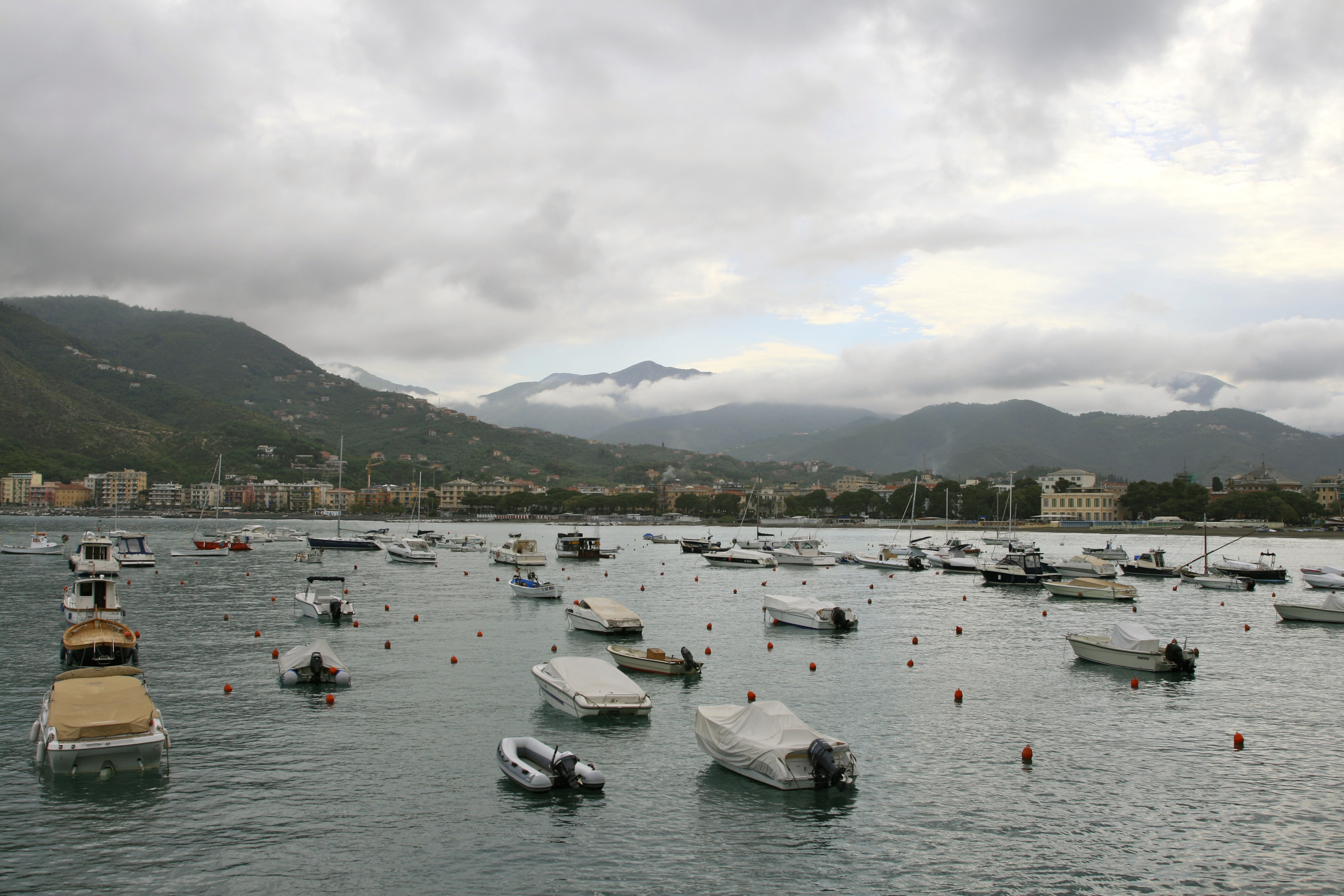
The Baia delle Favole

The Baia del Silenzio is hidden just off the main street of Sestri and you will be surprised by its beauty the first time you see it. You will want to return time and time again whatever the time of year.

On the other side, the Baia delle Favole is a one kilometre beach with a splendid view of part of the peninsula where Sestri is located.

Sestri Levante, in our opinion is also a good base away from the tourist locations of Portofino and the Cinque Terre. You can drive around by car in Liguria but the train which goes along the coastal towns and villages is also incredibly efficient and probably the easiest way to visit the CInque Terre (apart from using a boat). From here you are practically halfway between Genova and La Spezia and only kilometres away from Chiavari, Zoagli, Rapallo, Camogli, Santa Maria Ligure, Portofino (more about these places and Liguria in general in another blog post).

In Sestri Levante, you would do well not to miss Balin Cuisine. While not on the cheap side, this restaurant immediately struck a chord because like me the owner and chef is obsessed with food and the provenance of his ingredients. The menu is limited and depends on the fresh fish he finds at the market. He uses top quality condiments like the splendid Ligurian olives (taggiasche olives) and exceptional Ligurian olive oil. If you are not into fish, he has mouth watering Chianina beef from Tuscany.  His fish soup is exceptional, as are his pasta dishes and incredibly fresh fish but let him guide you and you will definitely not be disappointed.

For a quick coffee, the Cafe Centrale is a must. Inside, it feels like time has stood still and you can sit on the covered terrace sipping your coffee or aperitivo and reading a newspaper from one of the newsagents closeby. You will also find the international press here. His ice-creams are also exceptional so this is a place to keep visiting time and time again.

Just a few metres away from him is a very good enoteca or wine shop. Enoteca Grazia is a treasure of splendid Italian wines from some of the best producers around Italy. Here you will find an excellent selection of top quality Ligurian wines as well as wines from all Italian regions. One recommendation – if you are going by car, make sure to leave space in the boot because the temptations in this wine shop are huge.

An institution in Sestri Levante and even known outside the region is the bakery Panificio Tosi which makes exceptional focaccia, a Ligurian bread speciality. I would recommend a selection of different focaccias including the traditional one with salt and olive oil, the one with onions which is delicious as well as the one with tomatoes (which resembles a pizza) and the famous Focaccia al formaggio di Recco (which is a thin sheet of dough covered with a creamy cheese). His farinata, also a regional speciality made with chickpea flour is also to die for.

Tips: If you are there in summer and want to avoid the heat at least on one day head to the entro terra or (hills). One place to stop on the way to Varese Ligure (considered as one of the best small towns of Italy), is Castiglione Chiavarese, a very small village which is also famous for its salami made by the renowned butcher in this hilltop village.

At Varese Ligure eat at the the Vineria del Borgo, a small wine bar just off the main square with a great selection of wines. The owner is extremely well versed in wines and they serve excellent food for very reasonable prices. The pasta with pesto and with the walnut sauce were excellent as were the home made sausages cooked in white wine.

Osteria Francescana – the pursuit of perfection

Italian chef Massimo Bottura is a genius who has brought Italian cuisine to a completely different level. If France is renowned for its obsession with classics and Spain is the culinary hub of innovation, Italy is steeped in tradition. It is a country which takes its critics seriously. I remember a football coach once saying that the country had 60 million football coaches. A chef, I am not sure if it was Bottura, once said that there are as many food critics.

These food critics will obsess about whether any fish dish should be served with cheese (this is a taboo for many in Italy) and I can understand why. Italians shudder to think of mixing cheese with fish for example though there are some very minor exceptions. You can normally spot an authentic Italian pizzeria anywhere in the world by looking for their Pizza Marinara. If it has mozzarella, the chances are it is not run by Italians.

Bottura, with his Osteria Francescana, however, plays in a different league. Having gone in search of inspiration in France and Spain among others, he shows an incredible respect for ingredients. Who else would have thought of coming up with a dish called the five ages of parmesan which just showcases one ingredient?

Or who could invent a reconstructed lasagna with a sumptuous ragu and a lasagna crisp?

The Modenese chef has reinvented classics. His dishes all tell a story and you sometimes wonder how he gets his inspiration. When you walk into his restaurant you realise that he is obsessed with modern art and it is obviously here that he gets most of his inspiration for his dishes.

While modern, Bottura is also respecting tradition. He is always in search of the past but tries to reinterpret dishes and give them a modern twist without trying to be clever or over doing it.

The meal at Osteria Francescana was one to remember. It was a pity that Bottura was not there but in Istanbul because I am sure the experience would have been even better.

The meal started off with a macaroon of tomato and mozzarella. The flavour of the tomato burst in your mouth. The lemon granita and limoncello foam cleansed the palate for the start of the sensations menu.

image

The first dish was exceptional. It was eel served with a cream of polenta and apple gelee. The eel was perfectly cooked, worked incredibly well with the apple and the polenta was out of this world.

image

What followed was a joy for the eye but also for the palate. It was a pate served with a jelly of Lambrusco, the regional wine, as well as a puree of different peppers, green, red and yellow. Visually the plate was stunning.

image

Next came the Caesar Salad or rather Bottura’s interpretation of this classic salad. You need to be incredibly confident to serve such a dish in such a restaurant. But he used the lettuce as a condiment to 23 different ingredients all stuffed within the leaves from egg to parmesan crisps, to mint and anchovies, to bacon and mustard, lemon and only the chefs know what else. This was outstanding.

This was followed by what Bottura’s calls a day out in the Modenese countryside, a dish which was not only a joy to look at but also excellent (see it here). The snails were hiding under the leaves and it was topped with a beetroot sauce.

The lasagna stole the show for its originality, with the ragu cooked sous vide, but not for long as we were then served with what was probably the star of the afternoon, the five ages of Parmeggiano Reggiano dish which I have written about here.

image

This was then followed by frog legs coated in hazelnuts and a pasta which gave the illusion of a pond. After this came a superb pasta dish, Bottura’s notorious “The dream of a Frenchman to cook pasta like an Italian.” Three ravioli stuffed with fois gras which burst with flavour making you wish there were more.

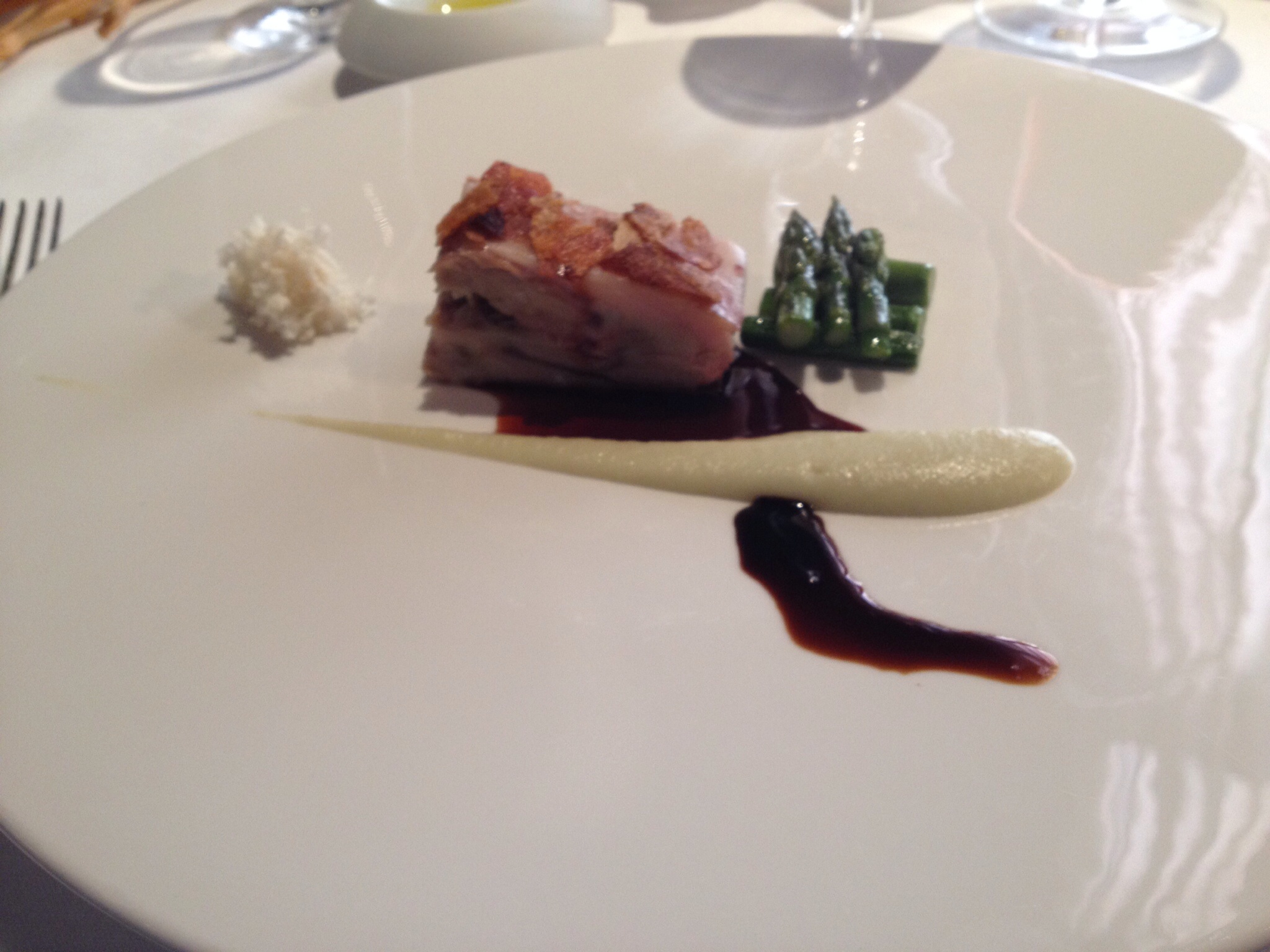
What followed was probably the best piece of meat which I have ever tasted. Pork cooked sous vide and then finished in a pan to crisp the top. It was served with a 45-year-old balsamic vinegar from Bottura’s private cellar together with asparagus and horse radish. What can I say. This was out of this world.

image

Next came a risotto cooked with olive oil and covering pigs cheeks, followed by an original dessert of strawberry sorbet, a pea cream, pea meringue served with fresh milk from Modena’s countryside.

Coffee was served with a medley of chocolates and sweets which as expected could not be faulted.

Verdict: Book a flight to Bologna which is only 30 minutes away from Modena and head there now before it becomes much harder to book. It is no wonder this restaurant is ranked number 3 in the world. Expect the unexpected. From Bottura you cannot expect anything less. Osteria Francescana will make you rethink what’s so special with Italian cuisine.