I recently had to spend a midweek day off with the children. I offered them a choice between either going to a park or a castle. I thought they would opt for a park but they immediately got excited about the prospect of visiting a castle.
Since there was agreement, we finally decided on the castle to go to since Belgium has its fair share of castles. I had always seen signs of Chateau de Beloeil on our trips to Lille or Pairi Daiza and have always been intrigued especially since it is also famous for its flower show and the yearly classical music concert. The castle opens at 1pm.
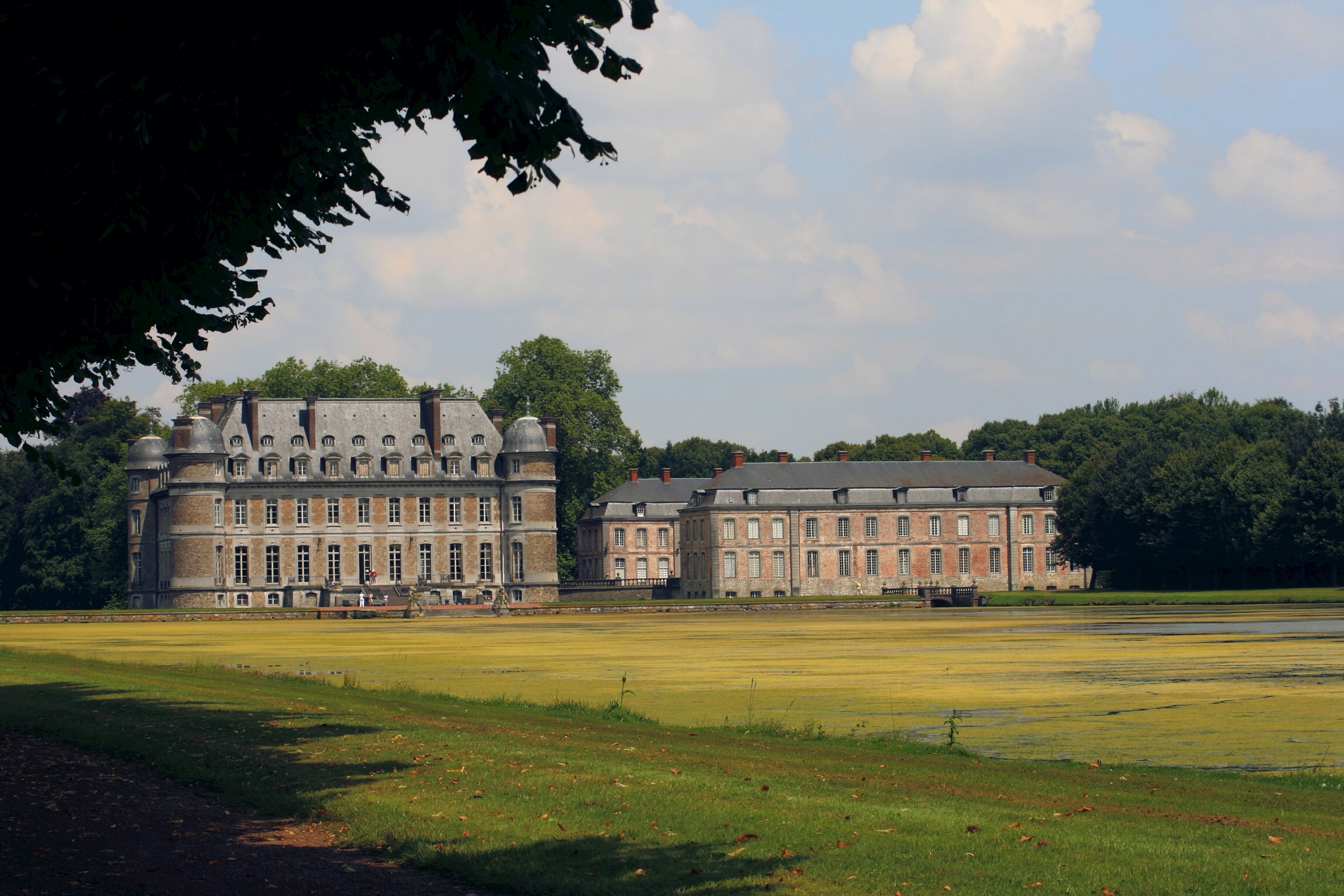
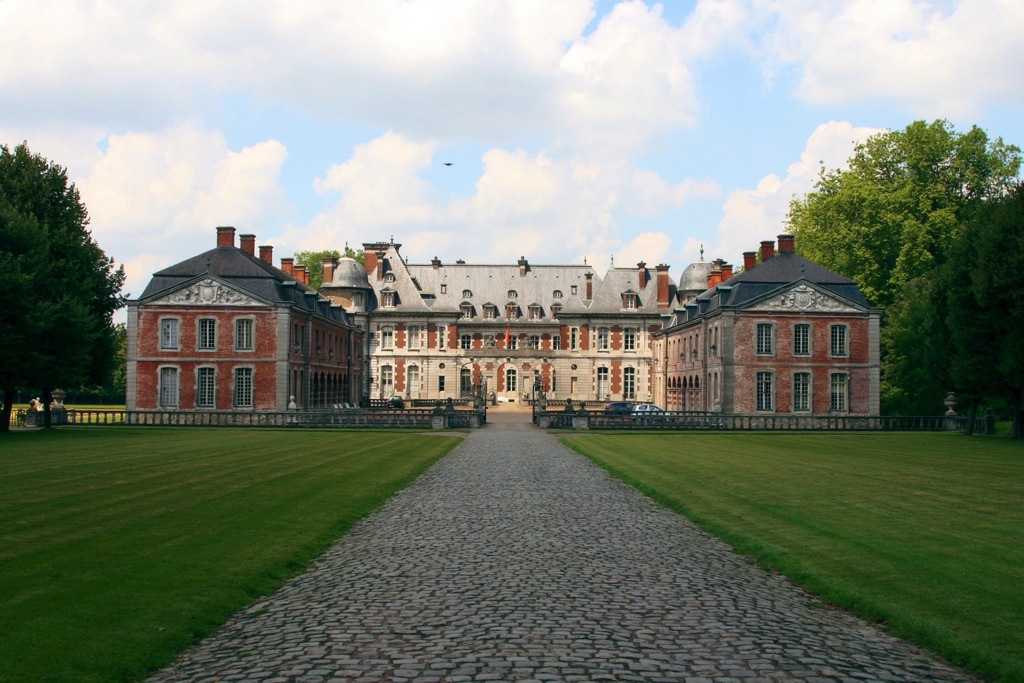
Chateau de Beloeil is considered to be the Belgian Versailles and on our visit we discovered that there is a reason for this. The park is very large and forms with the castle a very interesting place to visit away from the crowds.
We were there on a weekday and among the first to arrive so pretty much had the castle and park to ourselves. The castle has beautiful antique furniture, some unique pieces as well as beautiful tapestries from a once glorious past. It used to be the residence of the Princes de Ligne.
The French garden in the castle grounds offers a harmonious blend of water and nature, shadow and light. It is still maintained to its original design from 1664.
The Beloeil castle is surrounded by its moats and gardens and has been in Beloeil, Hainaut for the past eight centuries. It was a medieval fortress which was eventually transformed into a country home.
The children enjoyed their visit to the castle and were particularly impressed by the library with its over 20,000 books. They also enjoyed the walk in the park as well as the fish in a rather large pond. The castle is also famous for the annual classical music festival which is organised in September. We hope to visit the castle again in September for this event.
If you are heading to the Castle of Beloeil there is a culinary tip that I would like to share with you. On the way to Beloeil or to Brugelette to visit Pairi Daiza, you will come across a very small rural village called Gibecq.
It is well known for its free range chickens. They are called the Poulet de Gibecq and you can stop and buy them as well as other great products from a little farm shop in the village of Gibecq.
The farm shop is unfortunately only open on Wednesday and Friday afternoon (so you need to plan your trip accordingly) or else on Sunday mornings. The good thing is that they are also available in some butcher shops around Belgium so you would do well to ask for them.
The chickens are free range and allowed to grow naturally. They are fed with grains which come from farms in the area of Hainaut. Their feed is even milled in the area. They have a splendid taste unlike more commercial chickens you find in supermarkets. I therefore highly recommend them. The farm shop also has other culinary delights such as exceptional bio yogurt as well as products from the area.
If you are ever in the area, this is really worth a stop.
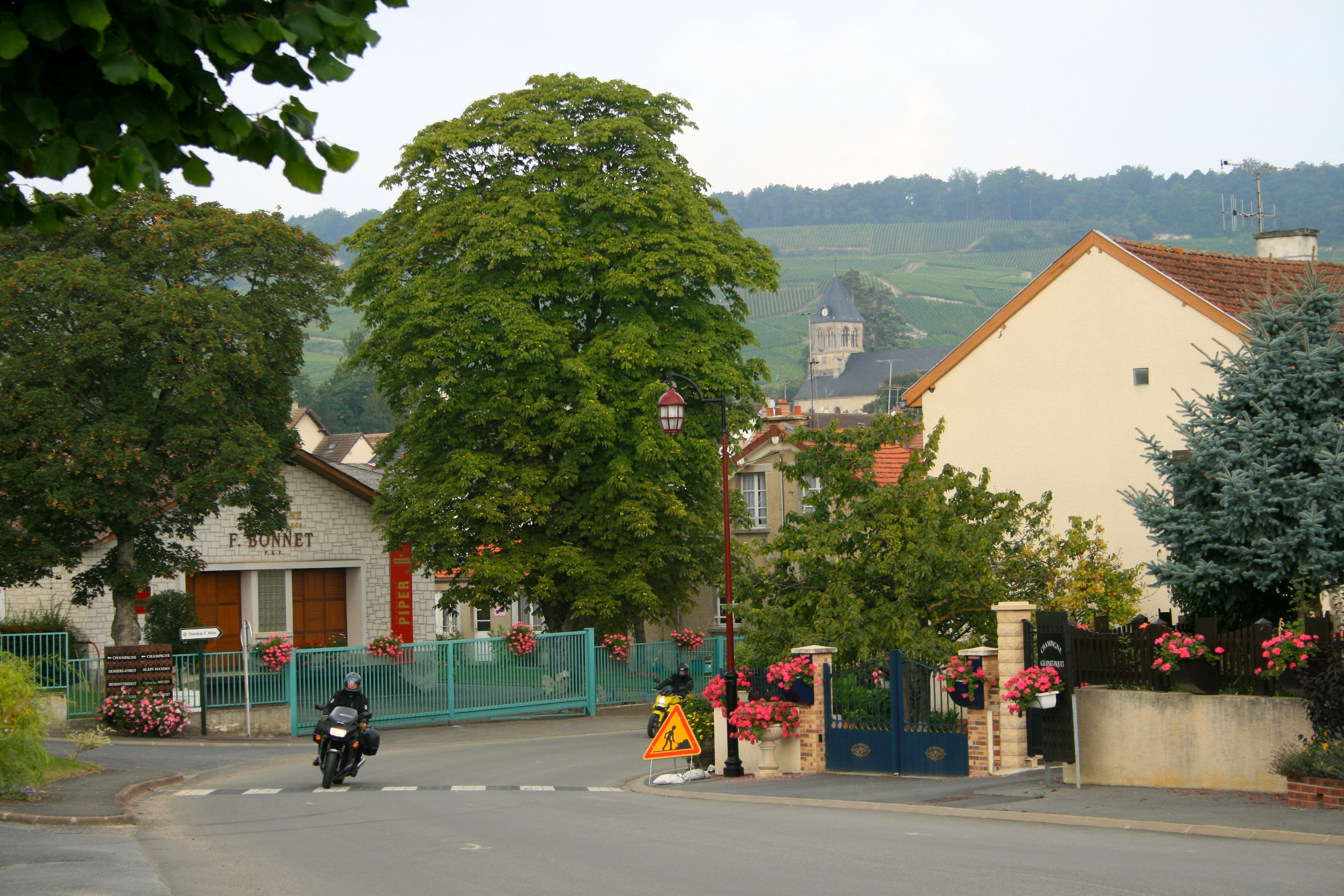
The first time we went to the Champagne region in France we had read about a very small producer in the South-East area of champagne in the Aube region known as the Côte des Bar. This is far away from the glitzy Champagne capital of Reims and Epernay. The Aube region produces a quarter of France’s champagne, and much of what the small producers make is sold on to the big houses that line the Avenue de Champagne in Epernay.
We were relatively new to visits to wineries in France and given that this was just before the summer period, we assumed that going to wineries for tastings would be pretty easy.
Finding the winery in Ville sur Arce did not prove a problem but given we arrived at lunch time there was a problem. The village just had a few houses and since it was lunch time we were by now pretty hungry. We headed to the winery to see whether we could get the tasting over and buy a few cases of champagne but found a note saying that the winemaker would only be back in three hours.
Given the fact that there was nothing to eat anywhere in the village, we headed to a village closeby. But to our dismay, everywhere was closed. This was again a wake-up call for us. I had read that holidays are taken seriously in France and Italy in summer but this seemed to defy logic.
Two village restaurants were closed for the holidays, we tried the bakery but it was also closed for the afternoon and would only reopen at 4pm. By now, panic was setting in. I am normally calm but there are a few things which can bring a temper. These are normally thirst and hunger. Only two shops were open at this point, the village supermarket and a bar. We asked at the bar whether there was any place we could eat and they told us the kitchen was closed but they would be happy to make a steak with fries.
Beggars cannot be choosers so we ventured in and had what at the time was probably the worst ever meal that we could eat in France. Nothing bad about it but just the fries were from a packet and the meat overcooked. It became all the more disappointing when some locals walked in half an hour later and were served with what looked like very appetising food.
Not yet ripe for picking
We finally made it to champagne Remy Massin et fils and ended up spending a good hour with Madame Massin who gave us a thorough explanation of the soil conditions of the terroir and then led us through a tasting. This was our first experience with champagne and was indeed a great eye-opener particularly since we then headed to Epernay and Reims for some champagne tasting at the major champagne houses. It was also the first time I managed to have a full conversation in French, albeit with a pronunciation which must have been close to incomprehensible.
We headed to Moet et Chandon a few days later and toured the beautiful champagne house and cellars. While the wine house, grounds and cellars in the city of Epernay are majestic, the minute you taste the wines, you realise that these are commercial champagnes and have nothing to do with champagnes produced by smaller producers or the top cuvees.
It seems like adventures are always within reach when we are in Champagne. When our stocks finished, two years later we headed back to the region, given it is within 2 and a half hours drive from Brussels. We were having a great time when on a Sunday morning towards the end of July panic struck again.
I was taking a scenic route amid the beautiful scenery of the Montagne de Reims and was hoping to fill my fuel tank since it was now on reserve. I still had a 70 kilometre range so there was no reason to panic. Little did I know that finding a petrol station open on a Sunday would be a far greater challenge. I tried two in different villages but both were closed and did not have an automatic pump. Given I was on reserve, I looked for the nearest petrol stations on the GPS and headed to the next village to again find the petrol station closed. I therefore went to the next one. This was on a national road so I was confident that this time we would be able to fill up the tank. But as we arrived, there was a sign saying the petrol station was closed for the holidays. It was 1 August and the sign said the petrol station will be closed till the end of August. By now, we were reaching a state of desperation. I walked into a hotel next door to the petrol station and asked the receptionist to guide us to the nearest petrol station explaining that we only had an 11 kilometre range left. She sent us to a supermarket a few kilometres away and told us that she was sure that there were automatic pumps. We ventured there knowing that if we got it wrong this time we would run out of fuel in the countryside on a hot August day. We were relieved to make it with just 7 kilometre range to spare and find that we could finally fill our fuel tank.
But amid these adventures (and this happens in many wine regions in Europe in the quiet months), this is a region worth visiting and not only for tasting champagne though there is a certain allure to walking in a bar, restaurant or cafe and being able to order a glass of champagne and enjoy the world go by.
One word of warning though, you will never look at champagne in the same way after a visit. You might become a bit more discerning and snob some champagnes which you might have been accustomed to before but which become too glitzy and commercial. That is not a bad thing though.
There are various ways to approach Champagne as a region. You can either base yourself in one of the main cities and then go for a day trip outside the cities or else you can try to stay in an idyllic village though risk not having amenities closeby.
There are three main areas to discover. There is Reims and its surroundings also known as Montaigne des Reims, there is Epernay and the Marne Valley with the famous Cote des Blancs which specialises in champagne made solely from the Chardonnay grape. Then there is the Aube, further south.
Great scenery wherever you go
The scenery in Champagne is always pleasing. Hautvillers, the home of Dom Perignon (who discovered the famous champagne method to make sparkling wine) is a very scenic village with picturesque houses and amazing views. The small champagne house Champagne G. Tribaut is not only worth visiting for its wines but also for the splendid views from its terrace. On a nice summer day, you might be able to taste their champagnes on a terrace overlooking vineyards. It is worth keeping in mind when you are visiting the region that most small champagne houses are closed on Sunday.
View from the terrace of Champagne G. Tribaut
In Hautvillers you can also sit and laze in the main cafe in the centre, the Cafe d’Hautvillers or else head to a splendid wine bar and shop Au 36 where you can either buy a great range of champagnes, taste wines and eat.
Another favourite village of ours is Oger in the Cote des Blancs. Getting to the Cote des Blancs is firstly very scenic. Oger is home to one of my favourite small champagne houses Jean Milan.
The picturesque village of Oger
Apart from the small villages, you would do well to visit the main cities of Champagne. These are Reims, Epernay, Chalon en Champagne and Troyes.
Reims is easily reachable from Paris and Brussels. The architecture in these cities is stunning, the cathedrals, as you can expect in this part of Europe beautiful. If you have time to visit only one champagne house, make it Pommery. Its chalk cellars are stunning as is the estate.
There is a big difference between Reims and Epernay. In order to visit a few of the major champagne houses in Reims you will need a car because the avenue which houses these wineries is huge. On the other hand, most of the champagne houses in Epernay can be found on probably the most spectacular street in the whole of Champagne. This is the Avenue de Champagne which houses some of the most impressive estates in the regions. All the top champagne houses of Epernay are within an area of less than a kilometre and the estates such as the one below are stunning.
In future blogposts I will give you tips on what to do and see in Champagne and its surroundings as well as a review of some of my favourite small Champagne producers.
There is no doubt to my mind that Pairi Daiza is one of the best attractions in Belgium. I would dare to say that it is probably also one of the best animal parks you can visit in Europe such is the beauty of this dream garden of 55 hectares.
Pairi Daiza can be found in Brugelette within the ruins of the Cistercian Abbey of Cambron and is protected from the outside world by a wall that stretches three kilometres. It means enclosed garden in ancient Persian. It is the oldest known name for paradise. This is really a paradise for children and adults alike.
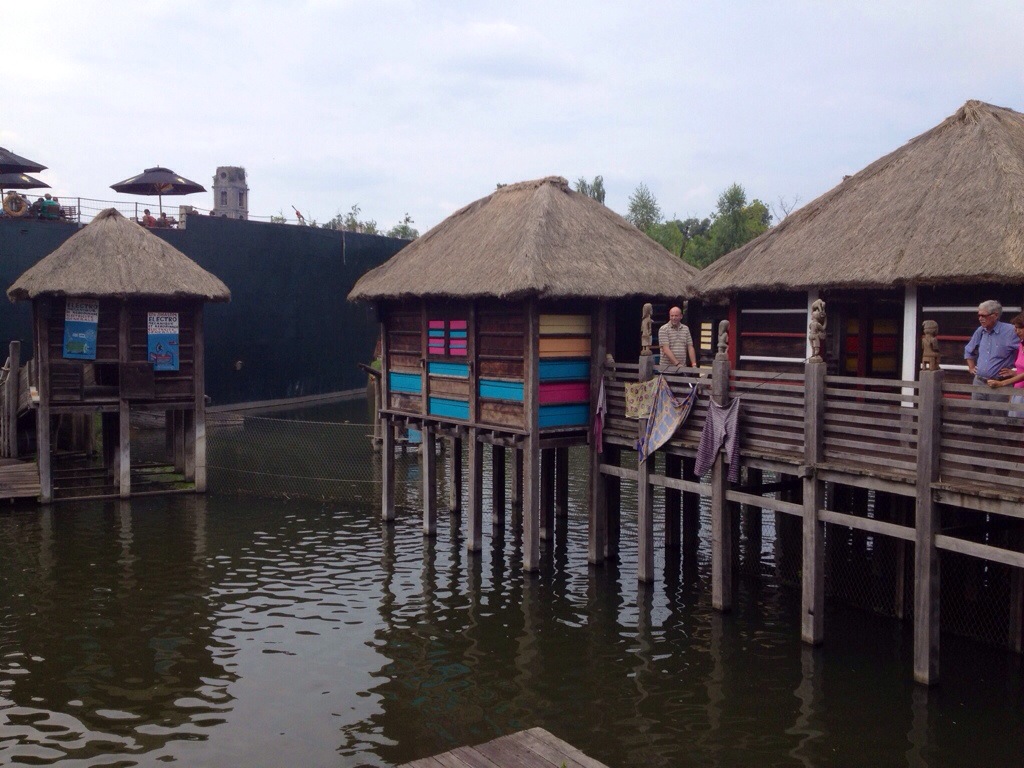
The garden is an architectural and cultural treasure. You will be surprised by the attention to detail that has gone into the development of the park. The architecture of the garden has been created by workers from China, Indonesia, Thailand and Africa adding to the authenticity to the place.
The park is constantly being upgraded so no visit is the same. This year, to receive the pandas, the already massive Chinese garden (the largest in Europe) has been enlarged.
I must confess that I have lost count as to how often we have been to this park. This is the third consecutive year we get a season ticket (if you go twice in a season you are better off getting a season ticket) and we and the children never get bored of visiting this botanical garden and animal park.
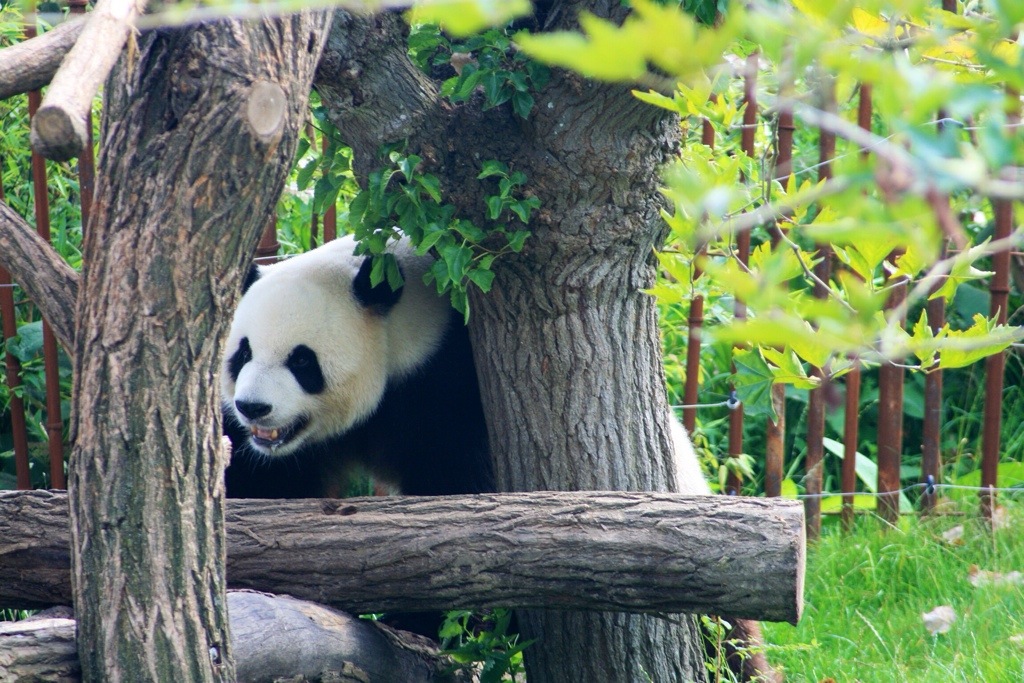
This year, there is the obvious added attraction of two Pandas which have been given to the park by the Chinese government for 15 years.
At Pairi Daiza you will find first and foremost nature, with beautiful ancient trees, huge birds of all kinds flying around the park, beautiful ruins of the Cisterian Abbey, flower beds and beautiful plants coming from across the world.
There is an aquarium within the park which is well worth a visit as well as a huge playground just below it.
The train ride, always a winner with the children is not running this year and will only be ready for next season because the park has been enlarged. It is maybe a pity since this is one of the best ways to view the beauty of this park.
If you have never been to this park (and you live in Belgium) then you might hesitate before getting a season ticket. But it is worthwhile given that the park has now grown to the extent that it has become difficult to view it in one day.
The park is divided into different sections including the Cite des Immortels which includes the pandas and leopards, the Terre des Origines with lions, tigers, elephants, camels, rhinos, hippos, giraffes and zebras among others. There is also the Royaume de Ganesha with a temple and other animals, the terre du froid and two lakes with an incredible variety of birds. There is the Porte des Profondeurs, the area with the aquarium, seals, otters and penguins among others as well as the Porte du Ciel.
Pairi Daiza also has a number of places where to eat. The most impressive is the new Brasserie which serves typical brasserie food and also has a brewery inside where they brew their own beer of Domaine Cambron. Both beers made here are worth trying.
No blogpost can do justice to this marvellous place. I therefore leave you to enjoy some photos of the park.
The park is open everyday from the start of the Easter holidays through to the end of the All Saints holiday. This year the park will therefore close on 2 November.
Details on the daily passes or annual subscriptions can be found on Pairi Daiza’s website.
It is possible that you can go to Tuscany many times and completely miss Volpaia. This is a tiny village in the middle of the Chianti region which is not mentioned on tourist guides and only accessible by car unless you feel like walking for kilometres up a never ending hill. This is a place which is completely off the beaten track though a few years ago I got worried when one of its restaurants was reviewed in a travel magazine as one of the best places to dine al fresco in Tuscany.
There is no such thing as tourist shops like many ‘touristic villages’ in such popular tourist areas. The allure comes from a picturesque medieval village, great views, a great bar, two restaurants and a winery which goes by the name of Castello di Volpaia.
This is a village that you can visit time and time again without getting bored. There is not much to do other than walk in the countryside or amid the narrow streets, drink a coffee or a glass of wine at the village’s only bar. All you need is good company or a nice book to soak up the splendid views.
There is also a winery which is part and parcel of the village and which has been making wine since the 1100s.
The impact as you head up to Volpaia is immediate. The view of this fortified town is breathtaking. But what is stunning about Volpaia is the unique atmosphere of this medieval village.
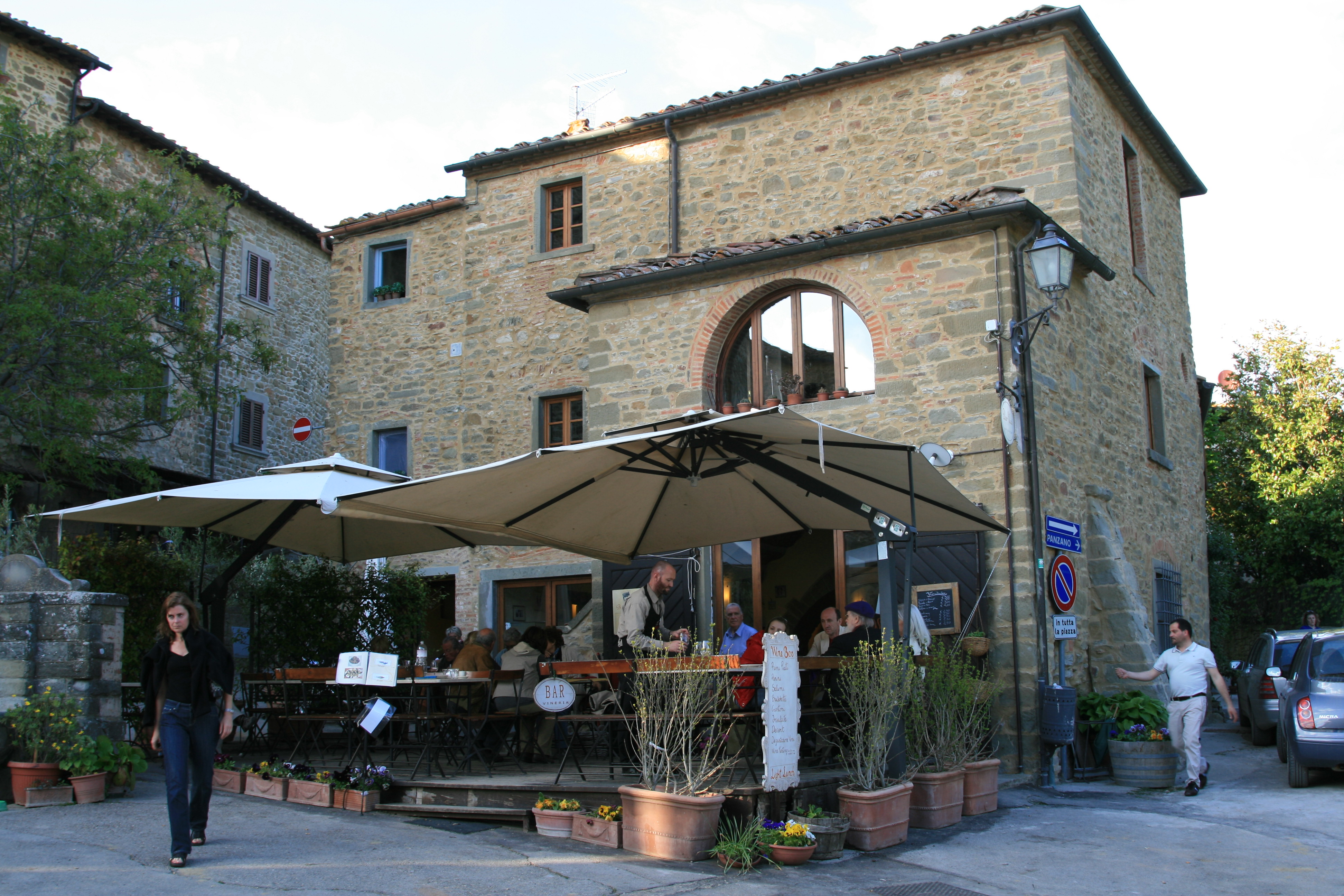
The Bar-Ucci
Once you arrive to the square you will see the restaurant La Bottega on one side and the wine bar Bar-Ucci on the other side. At the opposite end you will also see the entrance to the winery Castello di Volpaia which makes some exceptional wines including Chianti Classico as well as a range of Super Tuscans and the Tuscan sweet wine Vin Santo.
The Bar-Ucci which takes its name from the owner of the bar is a gem. Firstly, the coffees in the morning are exceptional. There is a great selection of wines by the glass from the Chianti region and you can also get platters of home-cured meat as well as pecorino which is served with honey and a selection of mustards.
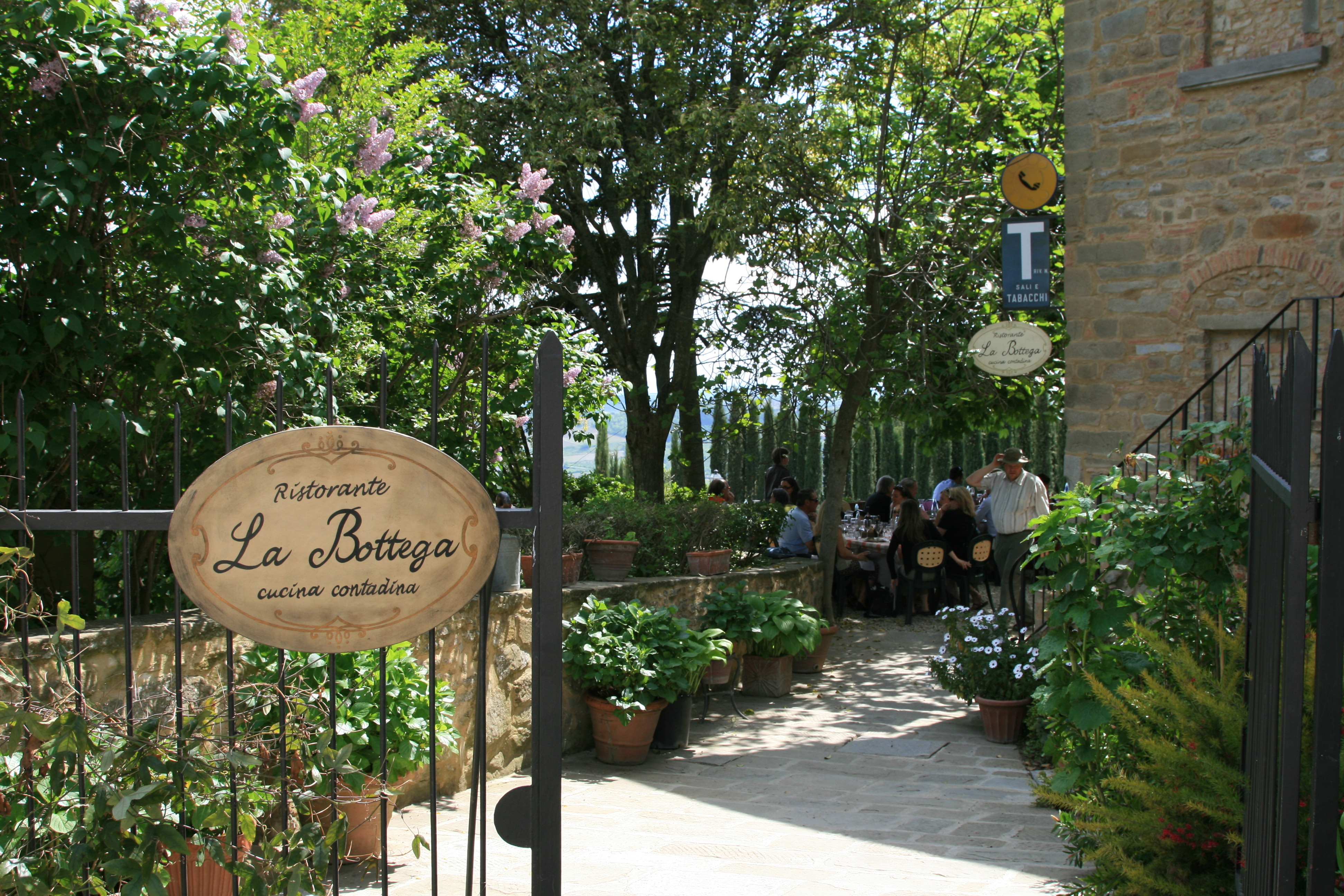
The stunning terrace at La Bottega
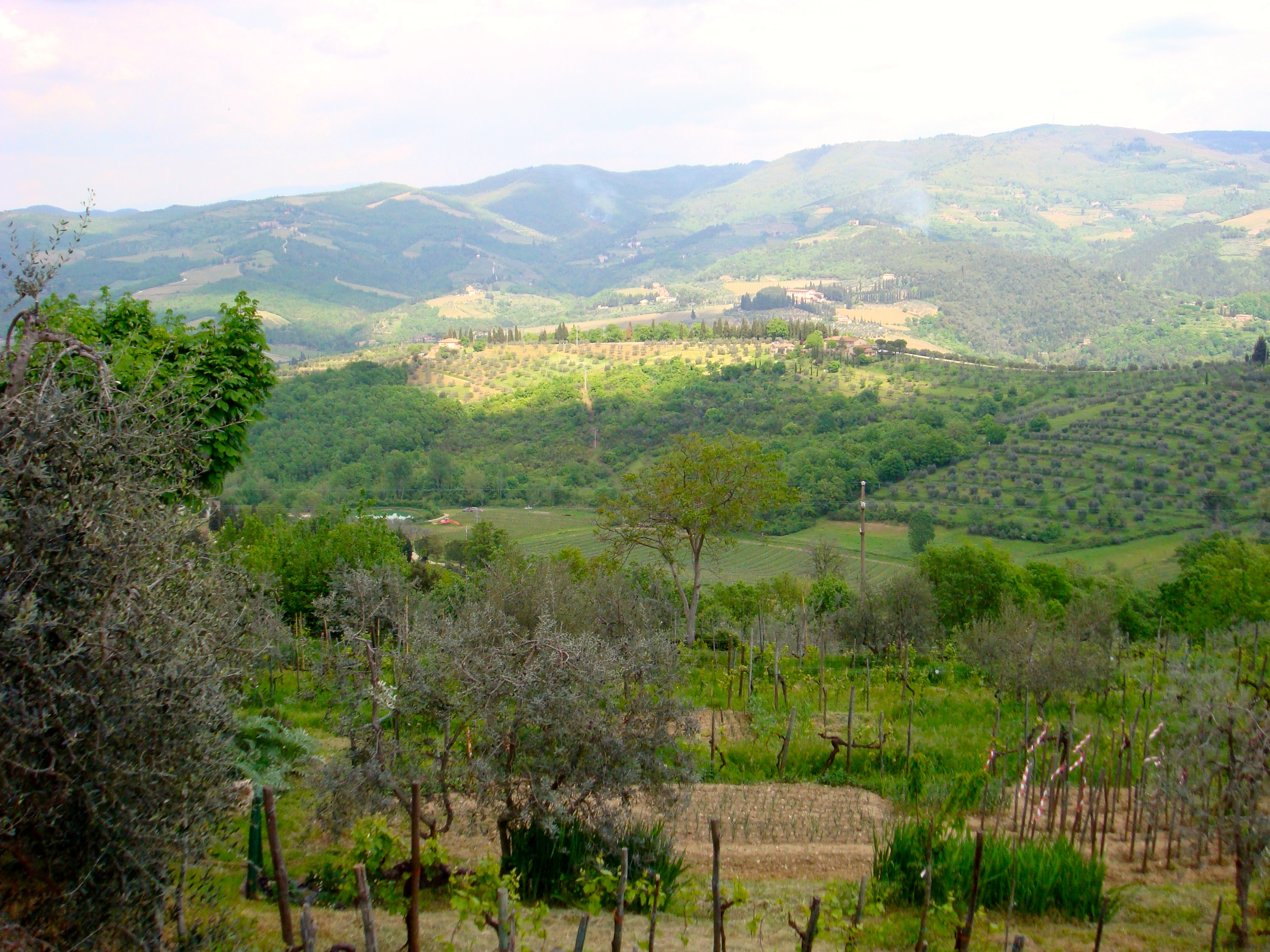
The restaurant La Bottega has probably one of the best terraces in Tuscany. It has a view of the famous Tuscan rolling hills (see below). But on top of that this is home cooking at its best. You get simple but great ingredients and turn them into a perfect meal. We have eaten here many times and the service and quality of the food has always been top notch. A few recommendations include the Pici al Cinghiale (a Tuscan type of pasta with a wild boar sauce), the pappardelle al tartufo or porcini mushrooms, the ribollita, rabbit served with a truffle sauce, the obvious bistecca alla fiorentina (t-bone steak) or a wild boar stew with olives. Their chocolate tart is unbelievably good. It is the first and only time that I can remember that all of us at table (six) ordered dessert twice it was so good.
The Castello di Volpaia winery
We did not try the other restaurant in Volpaia but visited the winery and tried a range of their wines. Castello di Volpaia, with vineyards surrounding this hilltop village, makes Chianti Classico, the Chianti Classico Riserva and a white wine which is a blend of Chardonnay and Sauvignon Blanc). They also make single vineyard wines which are all exceptional. My favourite is Il Puro Casanova, a 100% San Giovese. The property also produce wines from the upcoming region of Tuscany, the Maremma.
Their Vin Santo is also extremely good. The last time I tasted their Vin Santo was last December. it was a 15 year old wine with great complexity and still incredible freshness. Volpaia is only a few kilometres away from Radda in Chianti. If you are in the area, I recommend you visit and then drop me a line about your experience.
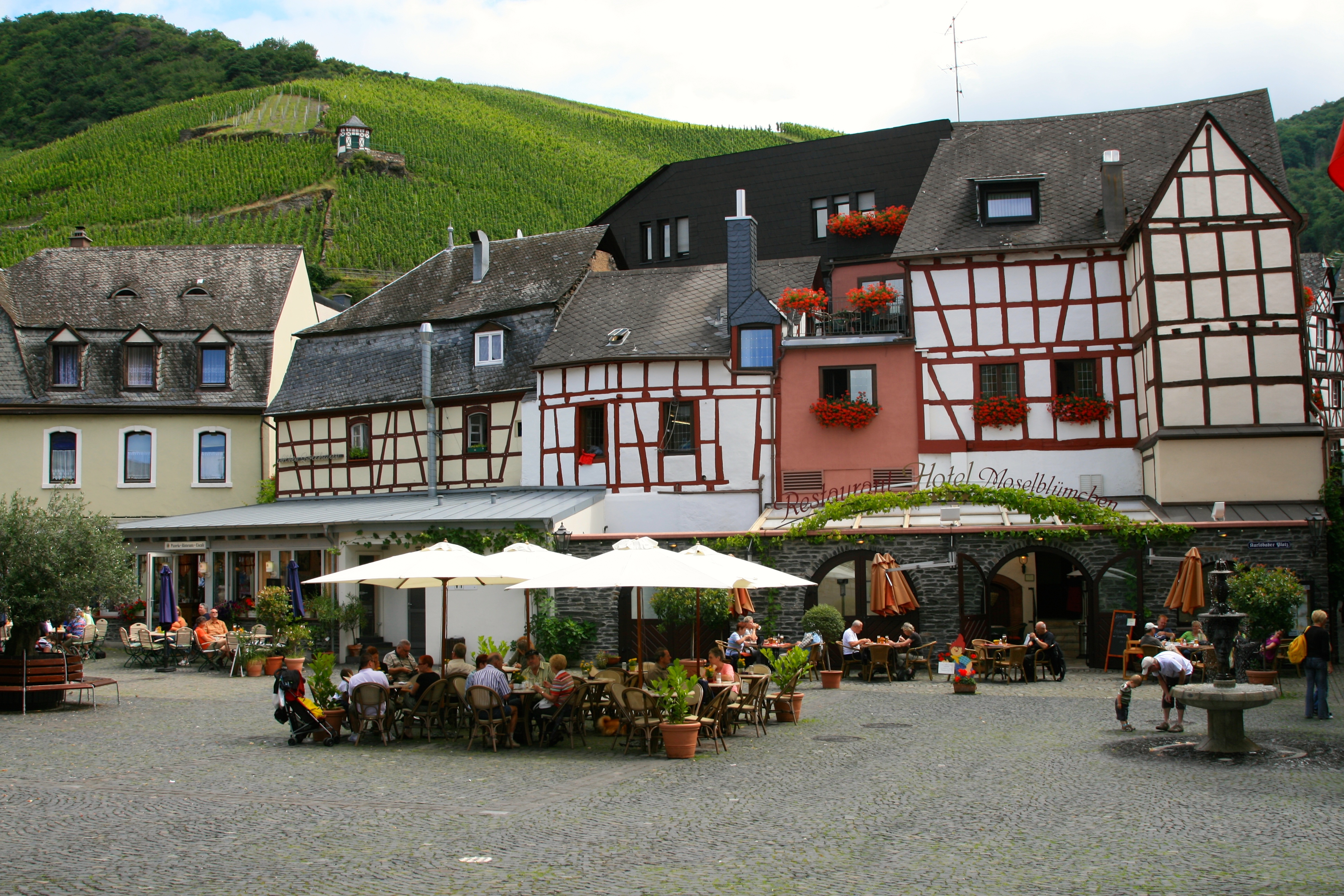
Stunning views in the Mosel. The wines can be exceptional.
German white wine is probably the wine lovers best kept secret. It only takes a few tastings of a German Riesling, whether bone dry, semi-sweet, sweet or even in its ice-wine variety and you are likely to be hooked. Riesling ages incredibly well, is very versatile and changes character along the way. It is also extremely versatile with food.
When the wine is not mass-produced, and mass production is probably one of the reasons why it had such a bad reputation, it can be brilliant. It also provides exceptional value for money.
A good Riesling to me has unique qualities. It is fresh, vibrant and has a great perfume. The freshness can be surprising even when you are drinking an older wine. It is not uncommon to open a 10 to 15 year old dry wine and still find incredible freshness.
The Mosel Valley is a beautiful and scenic region in Germany and exploring the vineyards and wineries is a great way to get a taste of German culture, its people and some wonderful wines. Most of the region is centred around eating and drinking.
For non-German speakers, German wines can be intimidating because of the labelling even though once grasped it is incredibly simple and extremely transparent. The classic gems of German wines are sweet wines which are best enjoyed alone. I have quite a number of sweet wines in my cellar which can be savoured over the years given the ageing potential is huge. However, because sweet wines are no longer so much in demand, German producers have opted for dry wines called trocken. When it is medium try it is called halbtrocken.
This weekend, we tasted two different wines from the Mosel. They were from Weingut Lotz.
We tried two wines from the same terroir. One was a 2010 and the other was a 2013. Both were great but also incredibly different one could not help wonder whether the 2013 would develop in such a way.
The location of the vineyards that produce these wines is the Erdener Herrenberg. The slate-stone ground is very weathered and produces wines with a special minerality.
The Lotz wines. (Photo taken from website of wine producer)
We first tried the 2010 Riesling Schieferstein from Weingut Klaus Lotz. For a four-year old wine this still had incredible freshness. It is complex on the nose with hints of exotic fruits. It has the right balance between acidity and sweetness and goes perfectly well with a light meal. We tried it again a day later and it still showed the same sort of freshness indicating that it still has the potential to age. Overall this is an incredible value for money wine.
The 2013 Lotz Schieferstein from the same producer has different labelling now. This is the sort of wine that you will enjoy drinking when it is extremely hot. It is crisp and has great acidity. It is not as complex on the nose as the 2010. It is indeed rather gentle on the nose though it has a really nice aroma which reminded me of marzipan. To me this was a perfect wine to drink as an aperitif also because the finish was not as long as the previous wine. Overall, it was still fantastic.
The great thing about Rieslings is their ageing potential and therefore the possibility to try different wines of different vintages. You do not need to worry if you don’t finish the wines. Firstly these two wines had a screw cap. Moreover, given that these wines can age, you can actually test their ageing potential by trying them days later. If they still taste good, then you know that they can still age.
The only problem with these wines is that they are so hard to find. But that makes them all the more alluring.
The weather has been extremely hot in Belgium over the past three days. On Friday evening, the temperature hovered around 30C and therefore I felt a great urge to eat some seafood as a reminder of summer holidays.
To me, shellfish and fish are always a reminder of summer and holidays. If there is one dish which I crave for but which alas is so difficult to find away from the Mediterranean is a pasta with sea urchins which is pure heaven when sea urchins is available. It is normally the first thing I try to eat whenever I go back home to Malta. It is also something I look out for when I am in the South of Italy or Sicily.
I headed to the fish shop close to our home to see what inspired me. Many times this is how I get inspiration for cooking. Nothing beats the joy of having no plan for lunch or supper and improvising on the basis of what you find on the market.
I found the famous Moules de Bouchot (small mussels from France which are incredibly tasty) and therefore mussels it would be for dinner, together with a mix of shellfish including calamari and scallops.
Few things reminds me of the sea and the taste of the sea more than fresh mussels. And while Belgium, France and the Netherlands are renowned for their mussels, they are cooked slightly differently in the Mediterranean. The main difference is that extra virgin olive oil is used instead of butter and no celery is used.
Belgium is known for many things. Its beer, chocolates, french fries and also mussels. There are many restaurants specialising in mussels and the methods of cooking them vary considerably. I prefer mine the Mediterranean way. In this case the simpler the recipe the better the result.
Many tell me that they find cooking shellfish or fish intimidating. I tend to disagree. I started cooking in my 20s and it was with fish and shellfish that I actually started. Once you get past the basics (which basically means finding a fishmonger you trust and asking how to cook things which you would not normally consider), you can be sure to go ahead for more complicated fare.
So the first recipe I share on this blog is a simple one. The only complicated thing is to clean the mussels which trust me is part of the fun.
Ingredients
(Serves two as a starter or else four as part of an antipasto)
1 Kilo of Mussels,
3 cloves of garlic finely chopped.
Extra virgin olive oil
White wine
Freshly ground black pepper
Method
1. Clean the mussels. On many occasions, the mussels can be bought already cleaned compared to the past where you would need to remove not only the beard but sometimes also dirt which stuck to the shells. To remove the ‘beard’ is easy. Pull towards you with a knife and force the beard out. Once you clean the mussels, place them in a bowl of clean water. Go through each one and discard any which are open or which float in the water. You can keep them in the fridge until you cook them (the day you buy them).
2. Crush the garlic and chop roughly, then sweat in the extra virgin olive oil (around three tablespoons). Then add a splash of wine (a cup of wine should be enough) and bring to boil.
3. Once the mixture is boiling add the mussels and parsley and put a lid on the saucepan. Give the pan a shake from time to time but try not to open the lid too often. The mussels should be ready within minutes when you see that they are all open.
4. Mussels are salty so you do not need to add any salt but they are extremely good with freshly ground black pepper. Serve immediately ideally with fresh bread to dip into the ‘soup’ at the bottom of the pan.
Wine suggestion: It is the common norm to drink white wine with shellfish or fish. In this case, nothing goes better than a white wine. I had this with a Vermentino from Sardegna which worked extremely well. You could also try it with a Sicilian fruity white such as a blend of Insolia and Chardonnay or a French Muscadet.










 Ivan Brincat