Pairi Daiza – one of the best attractions in Belgium

20140727-202605-73565373.jpg

There is no doubt to my mind that Pairi Daiza is one of the best attractions in Belgium. I would dare to say that it is probably also one of the best animal parks you can visit in Europe such is the beauty of this dream garden of 55 hectares.

Pairi Daiza can be found in Brugelette within the ruins of the Cistercian Abbey of Cambron and is protected from the outside world by a wall that stretches three kilometres. It means enclosed garden in ancient Persian. It is the oldest known name for paradise. This is really a paradise for children and adults alike.

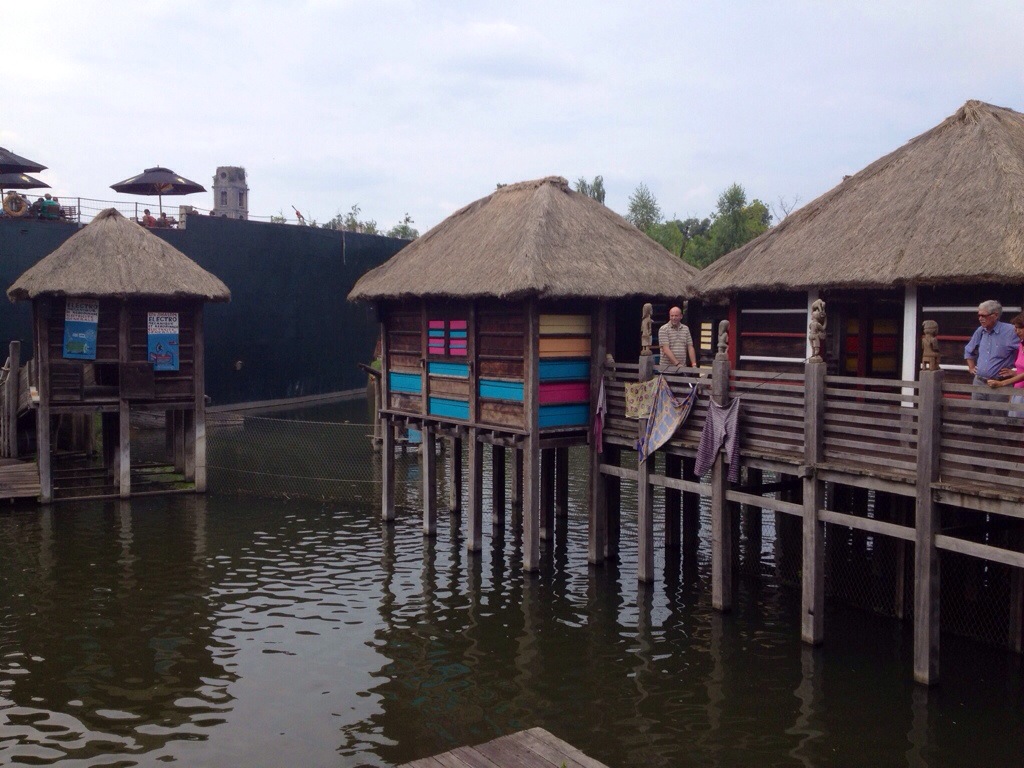
The garden is an architectural and cultural treasure. You will be surprised by the attention to detail that has gone into the development of the park. The architecture of the garden has been created by workers from China, Indonesia, Thailand and Africa adding to the authenticity to the place.

The park is constantly being upgraded so no visit is the same. This year, to receive the pandas, the already massive Chinese garden (the largest in Europe) has been enlarged.

I must confess that I have lost count as to how often we have been to this park. This is the third consecutive year we get a season ticket (if you go twice in a season you are better off getting a season ticket) and we and the children never get bored of visiting this botanical garden and animal park.

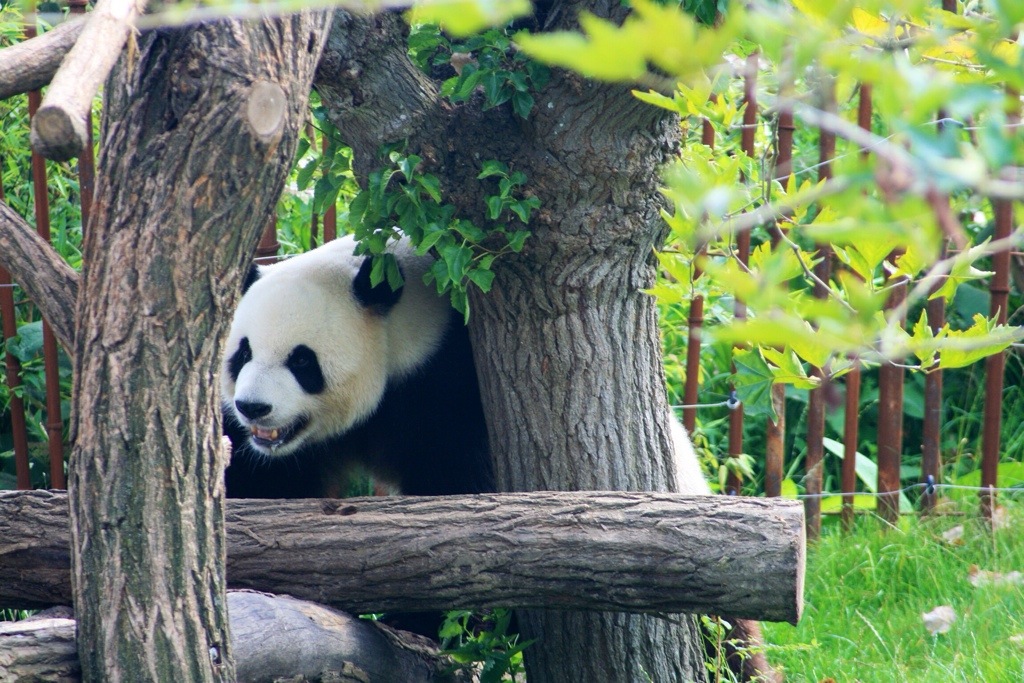
This year, there is the obvious added attraction of two Pandas which have been given to the park by the Chinese government for 15 years.

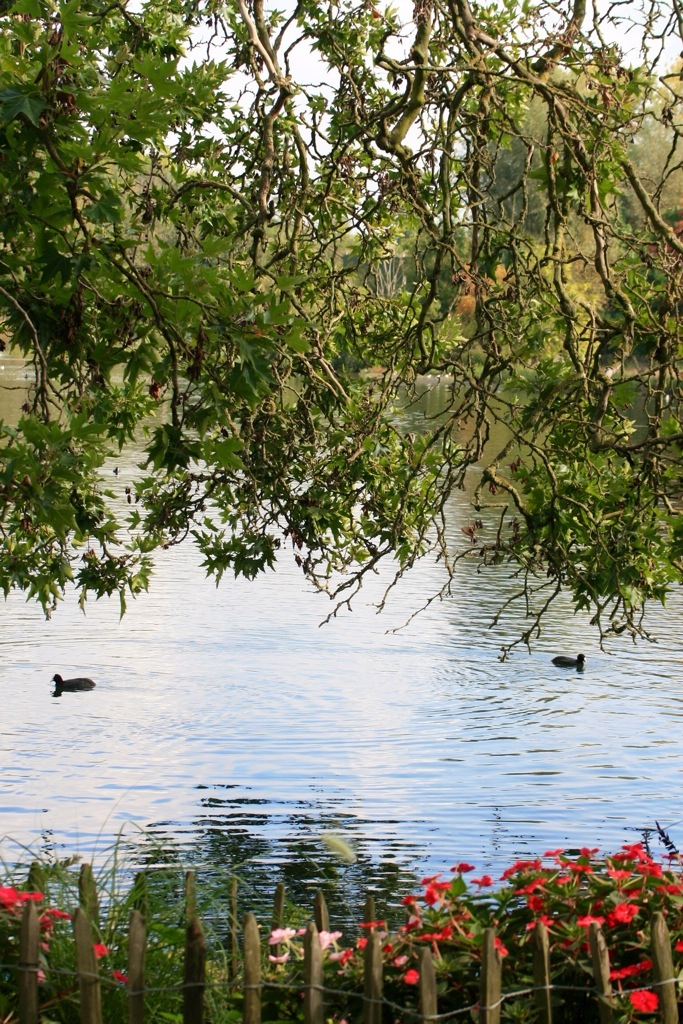
At Pairi Daiza you will find first and foremost nature, with beautiful ancient trees, huge birds of all kinds flying around the park, beautiful ruins of the Cisterian Abbey, flower beds and beautiful  plants coming from across the world.

There is an aquarium within the park which is well worth a visit as well as a huge playground just below it.

The train ride, always a winner with the children is not running this year and will only be ready for next season because the park has been enlarged. It is maybe a pity since this is one of the best ways to view the beauty of this park.

If you have never been to this park (and you live in Belgium) then you might hesitate before getting a season ticket. But it is worthwhile given that the park has now grown to the extent that it has become difficult to view it in one day.

The park is divided into different sections including the Cite des Immortels which includes the pandas and leopards, the Terre des Origines with lions, tigers, elephants, camels, rhinos, hippos, giraffes and zebras among others. There is also the Royaume de Ganesha with a temple and other animals, the terre du froid and two lakes with an incredible variety of birds. There is the Porte des Profondeurs, the area with the aquarium, seals, otters and penguins among others as well as the Porte du Ciel.

Pairi Daiza also has a number of places where to eat. The most impressive is the new Brasserie which serves typical brasserie food and also has a brewery inside where they brew their own beer of Domaine Cambron. Both beers made here are worth trying.

No blogpost can do justice to this marvellous place. I therefore leave you to enjoy some photos of the park.

20140727-202601-73561763.jpg20140727-202602-73562207.jpg

20140727-202604-73564652.jpg 20140727-202602-73562661.jpgIMG_1639IMG_647920140727-232656-84416967.jpg20140727-232656-84416422.jpg20140727-202604-73564178.jpg

20140727-202855-73735241.jpg

The park is open everyday from the start of the Easter holidays through to the end of the All Saints holiday. This year the park will therefore close on 2 November.

Details on the daily passes or annual subscriptions can be found on Pairi Daiza’s website.


What I enjoyed reading this week (4)

Moneglia is a place that we have missed on our two visits to Liguria mainly because it is rather complicated to get there by car. It is located between Sestri Levante and the Cinque Terre and is accessible through a one-lane tunnel. We were told that if you miss the tunnel crossing, you will have to wait for a rather long time before the traffic lights turn green. So we avoided heading there to eat in the evening. Ah, what a mistake that seemed to have been.

It seems to have been a pity given a restaurant there that has been reviewed by the Financial Times Magazine today. The restaurant, La Ruota seems to be one of those unmissable places. It has a view to die for, a wine list of unbelievable depth at incredible prices and amazing food according to Nicholas Lander who wrote about it in Financial Times weekend. Reading about it here is enough to make your mouth water.

This video reminded me of our honeymoon in Japan. Here you will see how sushi should be eaten. Here you get an explanation of how to eat sushi including the fact that you should not use chopsticks.

This is a very interesting article about restaurants changing menus and clients not being able to order what they were expecting to order.

I’ve written about French food and the new law in this blog. Here is an article from the New York Times in which Mark Bittman opines that the law will not really address the issue.

Here is an interesting book review about Umani, a taste which we cannot describe but which is essential to our food enjoyment.

And lastly, Carlos Slim, the Mexican business mogul this week suggested controversially that we may have to work a three day week in future but continue to work up to 75. Here is Richard Branson’s take on the matter.

And finally, thanks to Franklin for sending in this link about a splendid sounding herb garden in Flanders. This seems to be a must visit for foodies in Belgium.


There is no such thing as a free lunch

If you only have 15 minutes to spare this weekend, you must watch the video reportage from The Guardian on poultry factories.

Under the heading Revealed: the dirty secret of the UK’s poultry industry, it shows disgusting scenes from chicken factories and suggests that two thirds of chickens sold in the UK are contaminated with campylobacter. The report suggests that although the bug is killed by thorough cooking, around 280,000 people in the UK are currently made ill each year by it and 100 people die. It suggests that the contamination rates are known to have increased in the past decade.

My perspective of food changed completely after I read Fast Food Nation by Eric Schlosser. It is since that summer of 2001 that I have never set foot again in a fast food chain. That book had a deep impact on how I viewed food. This new reportage in the Guardian just goes to prove that many years down the line, nothing has improved

There are a few lessons to learn from this reportage.

1. There is no such thing as a free lunch. If a deal is too good to be true, then it is. Unfortunately, many people fall into the trap of trusting the provenance of their food just on the basis that they can buy it from the supermarket or that it is attractively packaged. Many trust that if it is being sold then it has to be good.  It is unfortunate because times are difficult and deals can therefore be very attractive but one needs to be cautious about the source of the produce they are buying,

2. It is better to enjoy meat (including chicken) every so often if you cannot afford it but ensure that when you eat it you go for free range or organic chicken. If a supermarket is selling a whole chicken for just over 3 Euros then you need to ask yourself some soul-searching questions before you even decide to buy it.

3. There have been too many food scandals in the past years which are eroding the trust of consumers. But so far, it does not seem to have an impact on the behaviour of consumers.

4. It might not be convenient to shop in your local shops. But everyone of us needs to make an effort to support our local shops rather than big chains since they usually know the precise source of their produce. Build a rapport with these shopkeepers. They are normally incredibly passionate about what they do. We owe it to our children that such stores survive.

5. We need to vote with our feet and show supermarkets that business as usual cannot go on as if nothing has happened. After the horse-meat scandal, one would have expected at least some basic checks. That this has not happened is rather shocking.

And for those who have never read or seen the documentary Fast Food Nation, here is the trailer of the film based on the book.

There is also Food Inc on the same theme.

http://www.youtube.com/watch?v=5eKYyD14d_0


50th blogpost and counting: Thank you for your encouragement

photo
Next month watch out for the insider’s tips to Malta and Gozo

This is my 50th blogpost so I would like to thank all those who have visited this blog, left a comment, written privately or else posted comments and given me suggestions in various forms in these amazing first two months.

When I set up to write this blog I had one aim in mind. As someone with a passion for good food, wine, travel and writing, I wanted to first and foremost record things for myself because many friends come to me for recommendations of where to eat not only in the places where I live or have lived but also in the places I have visited.

While it is quite normal for me to remember what I have eaten even many years ago in a particular restaurant or even at a friend’s place, I start to forget the names of places I visit and which have left their mark.
So this is a great way to catalogue my discoveries.

Mostly, however, I also wanted to prove to myself that just by the power of habit, I could find the time, despite a busy schedule (a full-time job, a family with two young children) to pursue my passion.

In this trip, I have been extremely lucky to find the full support of my dearest wife Giulia who is a constant source of encouragement and suggestions.

This blog also came about thanks to two great experiences in May/early June which gave me both the drive and the energy to set on this adventure.

The first was an unforgettable lunch at Massimo Bottura’s Osteria Francescana. His philosophy of following your passion struck a chord. The second was Rene Redzepi’s visit to Gent to promote the publication in Flemish of his new book. Both episodes allowed me to write about the experience and get me going. It provided the right source of creativity that I needed to get me going.

From there, ideas on what to write have kept flowing. The only real constraint is time. But I have managed to squeeze time to try and post five to six posts a week. When I look back to two months ago, when I started, I would never have imagined that I would reach 50 posts in such a short time. I hope to be writing my 100th post in two months time.

Once this becomes a habit, it just gets easier and easier. It is the same when you have not exercised for a while. You find that you no longer have the time. It becomes very hard to start. But once it becomes routine, then it becomes so much easier.

If you are aiming to do something, then I would fully encourage you to go ahead and do it. It does not have to be perfect. The blog is still very much a work in progress. I try to add functionalities and structure as I go along. What this experience has shown is that you just need to take a step at a time. First, you need to make that first step. Then a little step after that.

Please do keep coming back and provide your feedback on how to make this better and better.

For those who started following this blog only recently these are my three most popular blogposts:

Osteria Francescana – the pursuit of perfection

Jigger’s – one of Gent’s best kept secrets

Modena – a delightful city for the gourmet traveller

Next month, I hope to give you many insider tips to my home country Malta be it in the form of restaurant reviews, different city guides as well as ideas of what to do in the land of sun, sea and lots of culture.

The above photo is a teaser. It is the silent city called Mdina which used to be Malta’s old capital.


Volpaia – a medieval Tuscan village you have to visit

IMG_1521
Volpaia at sunset

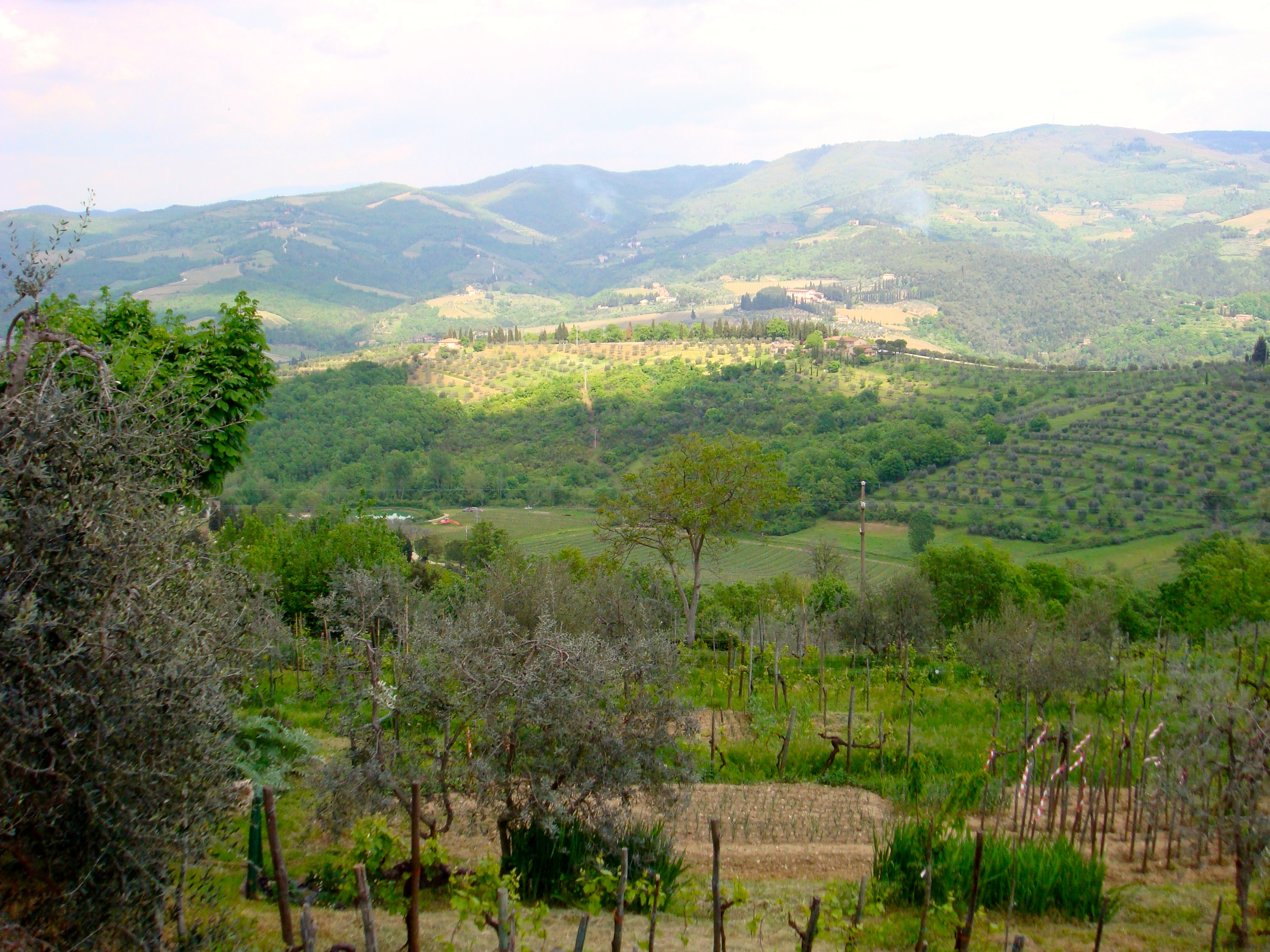
It is possible that you can go to Tuscany many times and completely miss Volpaia. This is a tiny village in the middle of the Chianti region which is not mentioned on tourist guides and only accessible by car unless you feel like walking for kilometres up a never ending hill. This is a place which is completely off the beaten track though a few years ago I got worried when one of its restaurants was reviewed in a travel magazine as one of the best places to dine al fresco in Tuscany.

There is no such thing as tourist shops like many ‘touristic villages’  in such popular tourist areas. The allure comes from a picturesque medieval village, great views, a great bar, two restaurants and a winery which goes by the name of Castello di Volpaia.

This is a village that you can visit time and time again without getting bored. There is not much to do other than walk in the countryside or amid the narrow streets, drink a coffee or a glass of wine at the village’s only bar. All you need is good company or a nice book to soak up the splendid views.

There is also a winery which is part and parcel of the village and which has been making wine since the 1100s.

The impact as you head up to Volpaia is immediate. The view of this fortified town is breathtaking. But what is stunning about Volpaia is the unique atmosphere of this medieval village.

IMG_1284
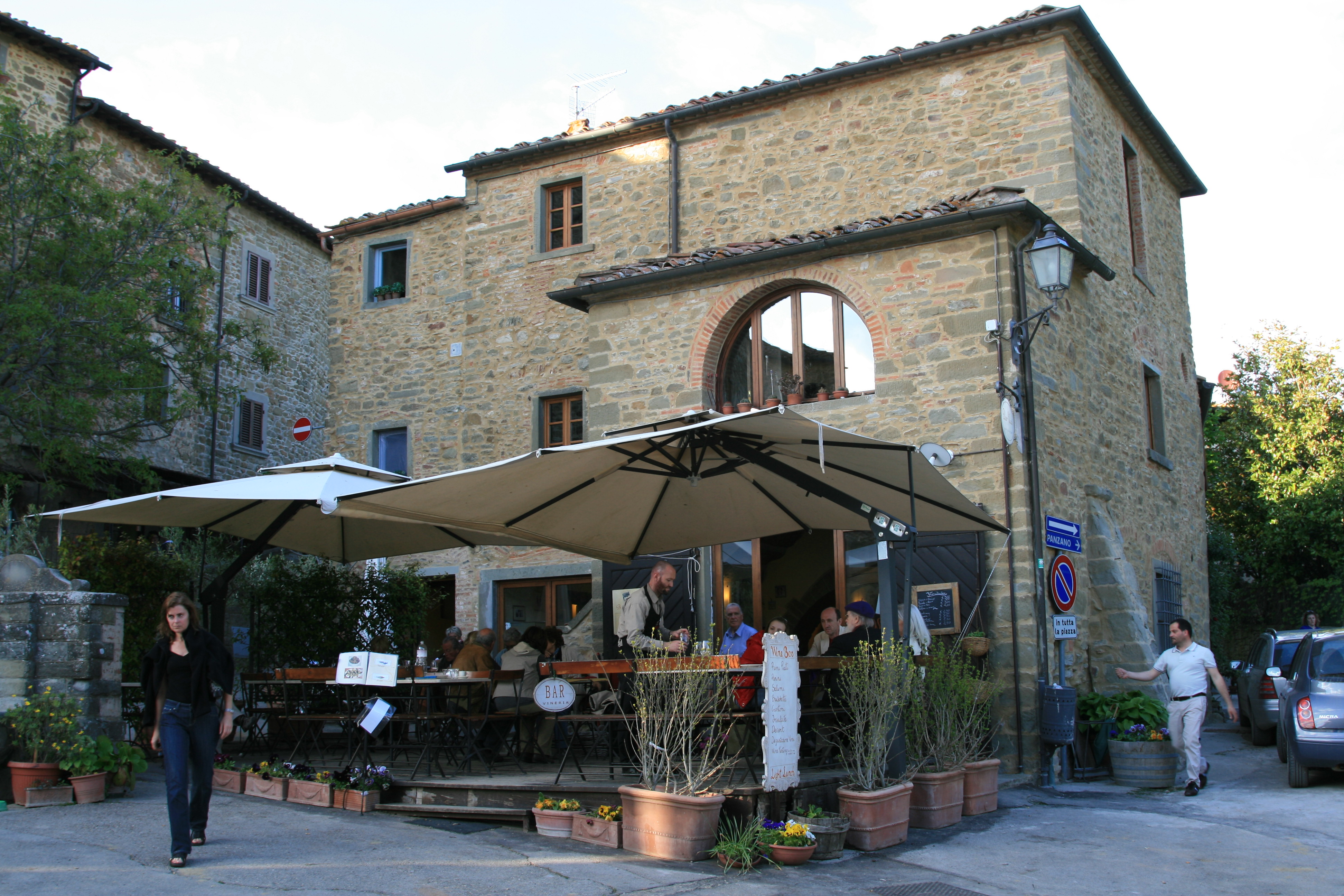
The Bar-Ucci

Once you arrive to the square you will see the restaurant La Bottega on one side and the wine bar Bar-Ucci on the other side. At the opposite end you will also see the entrance to the winery Castello di Volpaia which makes some exceptional wines including Chianti Classico as well as a range of Super Tuscans and the Tuscan sweet wine Vin Santo.

The Bar-Ucci which takes its name from the owner of the bar is a gem. Firstly, the coffees in the morning are exceptional. There is a great selection of wines by the glass from the Chianti region and you can also get platters of home-cured meat as well as pecorino which is served with honey and a selection of mustards.

IMG_1397
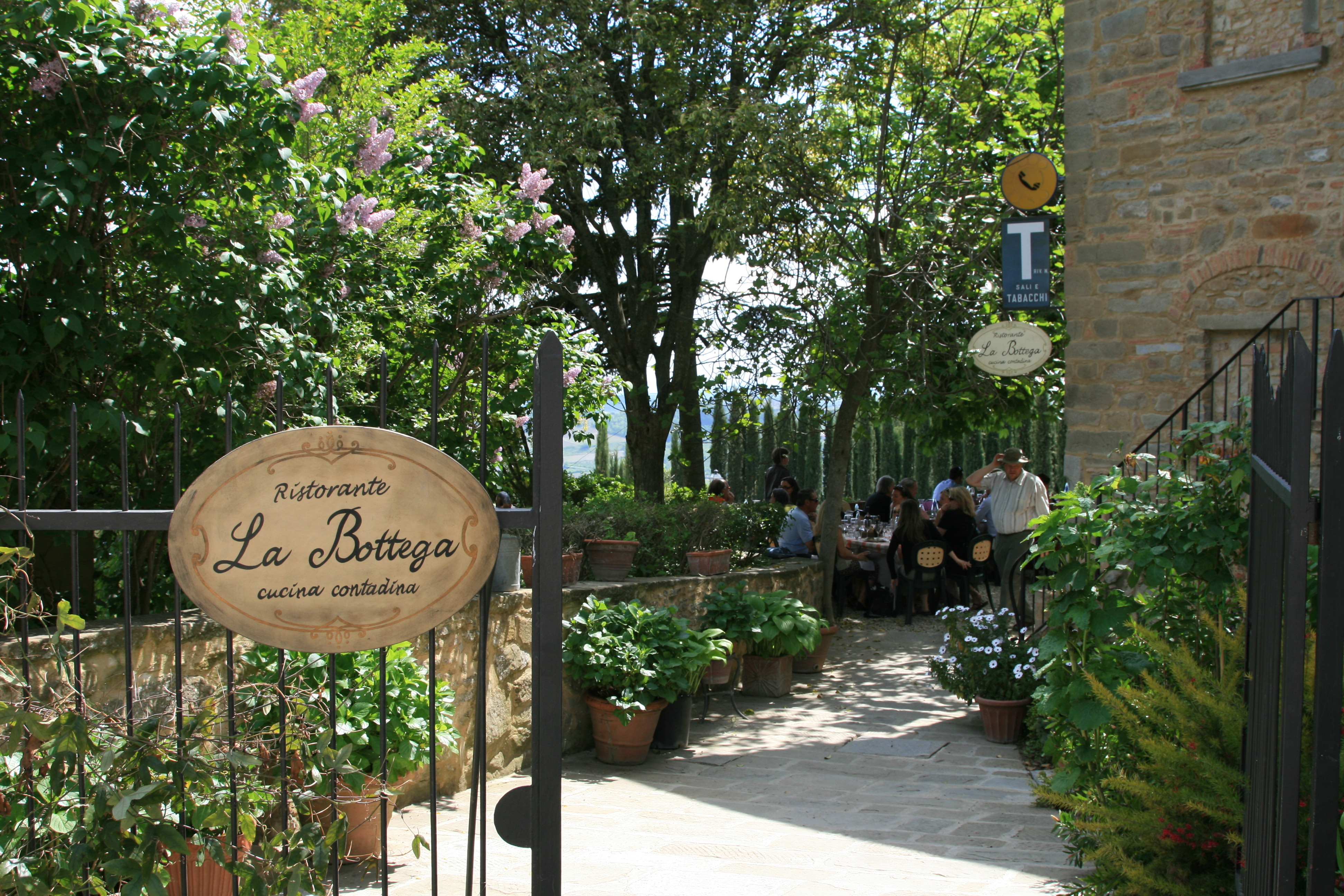
The stunning terrace at La Bottega

The restaurant La Bottega has probably one of the best terraces in Tuscany. It has a view of the famous Tuscan rolling hills (see below). But on top of that this is home cooking at its best. You get simple but great ingredients and turn them into a perfect meal. We have eaten here many times and the service and quality of the food has always been top notch. A few recommendations include the Pici al Cinghiale (a Tuscan type of pasta with a wild boar sauce), the pappardelle al tartufo or porcini mushrooms, the ribollita, rabbit served with a truffle sauce, the obvious bistecca alla fiorentina (t-bone steak) or a wild boar stew with olives. Their chocolate tart is unbelievably good. It is the first and only time that I can remember that all of us at table (six) ordered dessert twice it was so good.

IMG_1282
The Castello di Volpaia winery

We did not try the other restaurant in Volpaia but visited the winery and tried a range of their wines. Castello di Volpaia, with vineyards surrounding this hilltop village, makes Chianti Classico, the Chianti Classico Riserva and a white wine which is a blend of Chardonnay and Sauvignon Blanc). They also make single vineyard wines which are all exceptional. My favourite is Il Puro Casanova, a 100% San Giovese. The property also produce wines from the upcoming region of Tuscany, the Maremma.

Their Vin Santo is also extremely good. The last time I tasted their Vin Santo was last December. it was a 15 year old wine with great complexity and still incredible freshness. Volpaia is only a few kilometres away from Radda in Chianti. If you are in the area, I recommend you visit and then drop me a line about your experience.

DSC00835
The view from Volpaia


Wines from the Mosel

IMG_3815
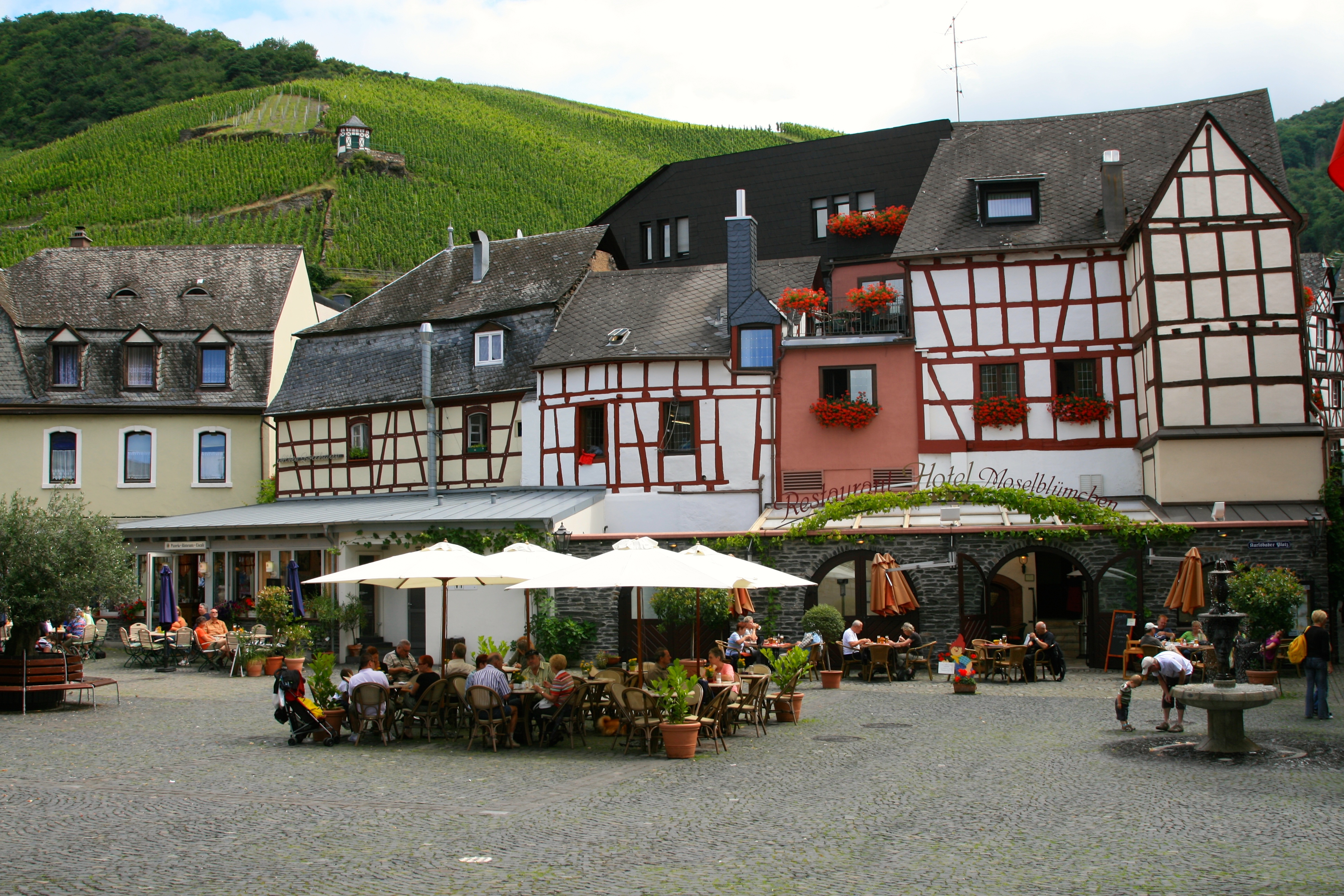
Stunning views in the Mosel. The wines can be exceptional.

German white wine is probably the wine lovers best kept secret. It only takes a few tastings of a German Riesling, whether bone dry, semi-sweet, sweet or even in its ice-wine variety and you are likely to be hooked. Riesling ages incredibly well, is very versatile and changes character along the way. It is also extremely versatile with food.

When the wine is not mass-produced, and mass production is probably one of the reasons why it had such a bad reputation, it can be brilliant. It also provides exceptional value for money.

A good Riesling to me has unique qualities. It is fresh, vibrant and has a great perfume. The freshness can be surprising even when you are drinking an older wine. It is not uncommon to open a 10 to 15 year old dry wine and still find incredible freshness.

IMG_3854The Mosel Valley is a beautiful and scenic region in Germany and exploring the vineyards and wineries is a great way to get a taste of German culture, its people and some wonderful wines. Most of the region is centred around eating and drinking.

For non-German speakers, German wines can be intimidating because of the labelling even though once grasped it is incredibly simple and extremely transparent. The classic gems of German wines are sweet wines which are best enjoyed alone. I have quite a number of sweet wines in my cellar which can be savoured over the years given the ageing potential is huge. However, because sweet wines are no longer so much in demand, German producers have opted for dry wines called trocken. When it is medium try it is called halbtrocken.

IMG_3959

This weekend, we tasted two different wines from the Mosel. They were from Weingut Lotz.

We tried two wines from the same terroir. One was a 2010 and the other was a 2013. Both were great but also incredibly different one could not help wonder whether the 2013 would develop in such a way.

The location of the vineyards that produce these wines is the Erdener Herrenberg. The slate-stone ground is very weathered and produces wines with a special minerality.

20120524-114016-Sortiment
The Lotz wines. (Photo taken from website of wine producer)

We first tried the 2010 Riesling Schieferstein from Weingut Klaus Lotz. For a four-year old wine this still had incredible freshness. It is complex on the nose with hints of exotic fruits. It has the right balance between acidity and sweetness and goes perfectly well with a light meal. We tried it again a day later and it still showed the same sort of freshness indicating that it still has the potential to age. Overall this is an incredible value for money wine.

The 2013 Lotz Schieferstein from the same producer has different labelling now. This is the sort of wine that you will enjoy drinking when it is extremely hot. It is crisp and has great acidity. It is not as complex on the nose as the 2010. It is indeed rather gentle on the nose though it has a really nice aroma which reminded me of marzipan. To me this was a perfect wine to drink as an aperitif also because the finish was not as long as the previous wine. Overall, it was still fantastic.

The great thing about Rieslings is their ageing potential and therefore the possibility to try different wines of different vintages. You do not need to worry if you don’t finish the wines. Firstly these two wines had a screw cap. Moreover, given that these wines can age, you can actually test their ageing potential by trying them days later. If they still taste good, then you know that they can still age.

The only problem with these wines is that they are so hard to find. But that makes them all the more alluring.

IMG_3999