I have great memories of a holiday in Cornwall on the South Western coast of England. More on that to come later this month. In the meantime a friend shared this. Hilarious.

I have great memories of a holiday in Cornwall on the South Western coast of England. More on that to come later this month. In the meantime a friend shared this. Hilarious.

Many people rave about the Cinque Terre that you may wonder whether you might end up being disappointed when you visit. Sometimes places just do not live up to their hype.
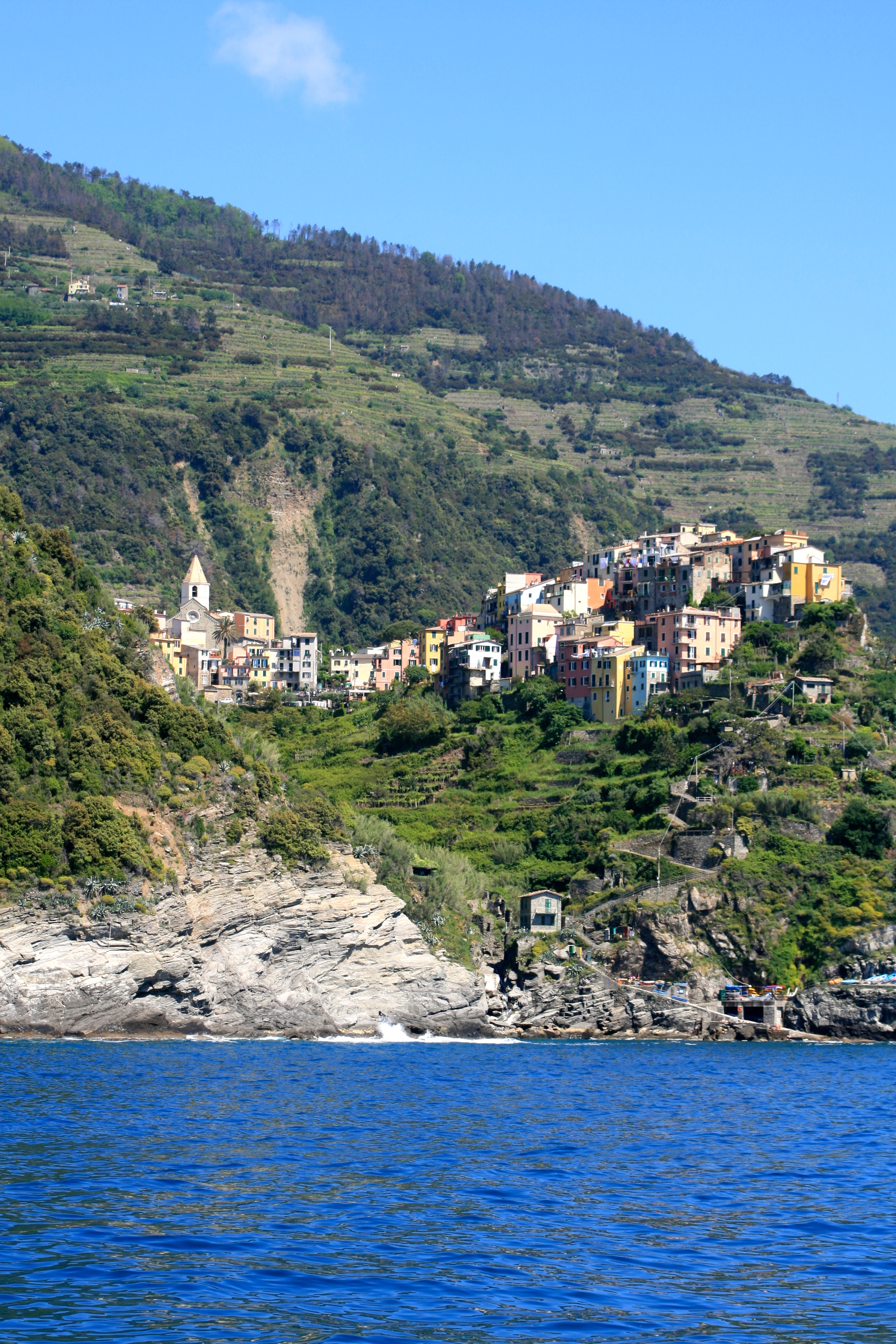
This is not the case with the five villages which make up the Cinque Terre. As the sun glistens on the sea, the waves break on the bow of the small ferry taking you from Monterosso al Mare to one of the other villages, you cannot help but stand in awe at the natural beauty of this place.
The sea is a beautiful dark blue, the cliffs are dark grey making them all the more dramatic and in the background you see beautiful greenery and vineyards and you wonder how this all came about.
It is difficult, if not outright impossible to list what the must see destinations are in Italy. If you do not live there, the only way to go about it is to return time and time again to different parts to savour it all in.
Many times, it all depends on what you would like to do and see. Whether its city trips, a mix of city and countryside or else spectacular scenery, there is a choice for pretty much everyone.

There is, however, something spectacular about the Cinque Terre which makes them one of the most well known destinations in Italy. The “Five Lands” which is the literal meaning of CInque Terre in Italian comprises five villages: Monterosso al Mare, Vernazza, Corniglia, Manarola and Riomaggiore. The coastline, the five villages and the surrounding hillsides are all part of the Cinque Terre National Park. When you go there you will realise why it is also a UNESCO World Heritage Site.
The Ligurian coast might not be as spectacular as the Costa Amalfitana but it gives it, in my view, a very good run for its money.
The Cinque Terre is a must visit in any case. With villages perched over cliff-tops, or accessible only by train, sea or on foot this is really a special pal e.
Both if you are at sea or looking towards the sea the views are nothing short of breath-taking. There are many ways to approach the Cinque Terre. Many people head there for a day trip from Tuscany or some of the main cities of Italy. This is a great pity because Liguria has so much to offer.
The first time we visited, the Cinque Terre had been hit by deadly floods which caused devastation and havoc in some of the villages, particularly Monterosso and Vernazza. The marks of the flood where still visible when we visited.
There are four ways to get to the Cinque Terre. The best option is probably by train. The train ride which goes from Genova to the Cinque Terre and keeps going to La Spezia is spectacular. In many places you will be literally within a stone throw away from the sea. The views are great.
If you are staying in any of the coastal villages or towns (check out my post on Sestri Levante) you will be able to catch the train to the Cinque Terre. In that case, I would recommend that you stop in Monterosso, visit this first village and then take a boat-ride to Riomaggiore which enables you to see the villages from the sea. This is clearly one of the highlights.
Another option would be to take a boat ride from Sestri Levante or Porto Venere at the other end of the Ligurian coast. There are also boats from the harbour of Genova and La Spezia. We are told that the views are amazing. Unfortunately, the two times we visited the boat rides were not operational because of the rough sea.
The third option, once you get there, is to walk from one village to another. The Cinque Terre are in fact famous for a walking trail called the Sentiero Azzurro which connects the five villages. Given that most of them involve climbing or going up stairs, we have unfortunately not walked the trail or parts of it yet given our children are still too young to walk the whole way.
The other option is to go there by car. But this is not recommended. First it is not easily accessible and you will only be able to reach a few of the villages. Parking is not cheap and easy to find particularly during peak season.
The villages have been built over the centuries by people who carefully built terraces on the rugged steep landscape right up to the cliffs that overlook the sea. One of the allures of these villages is the fact that they are not ruined by commercial interests and while paths, trains and boats connect the villages, most of them are not reachable by car.
The wines of the Cinque Terre are very special. You can see why from the photos because the terrain is very rough and the vineyards are on cliffs which go down to the sea and the wines produced therefore have exceptional minerality. The grapes are Bosco, Albarola and Vermentino. These grapes are used to make the Cinque Terre wine as well as the Sciacchetra which is a really special sweet wine. One recommendation if you are in the Cinque Terre is to try the Sciacchetra as an aperitivo. Sip it while enjoying great views. Life doesn’t get much better.



I recently had to spend a midweek day off with the children. I offered them a choice between either going to a park or a castle. I thought they would opt for a park but they immediately got excited about the prospect of visiting a castle.
Since there was agreement, we finally decided on the castle to go to since Belgium has its fair share of castles. I had always seen signs of Chateau de Beloeil on our trips to Lille or Pairi Daiza and have always been intrigued especially since it is also famous for its flower show and the yearly classical music concert. The castle opens at 1pm.
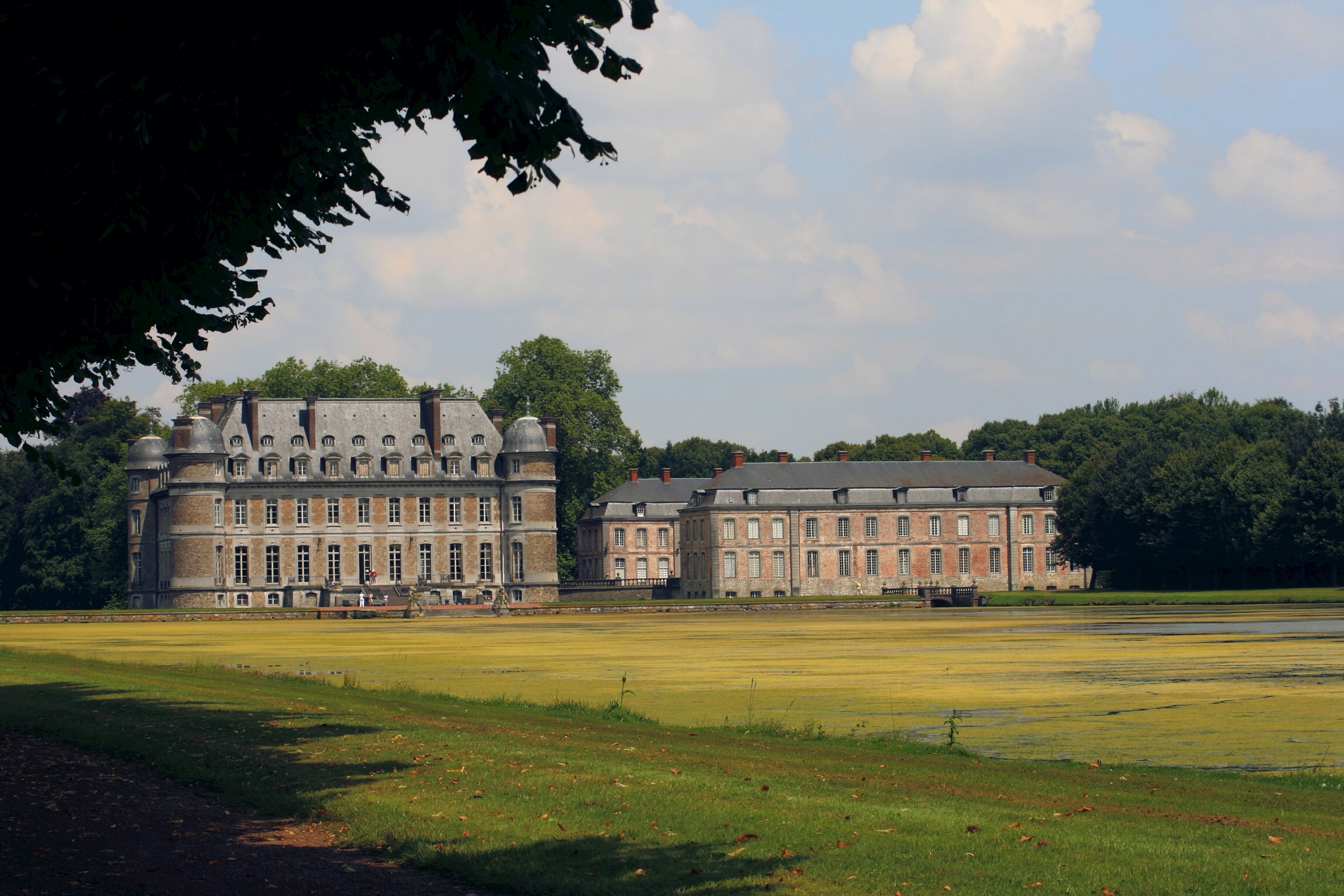
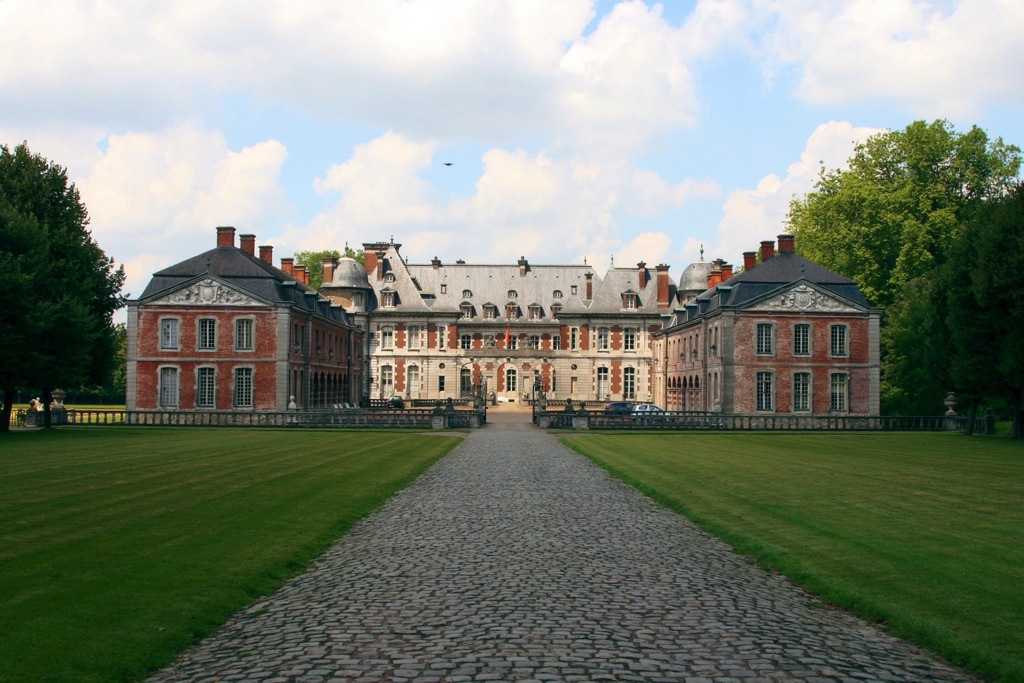
Chateau de Beloeil is considered to be the Belgian Versailles and on our visit we discovered that there is a reason for this. The park is very large and forms with the castle a very interesting place to visit away from the crowds.
We were there on a weekday and among the first to arrive so pretty much had the castle and park to ourselves. The castle has beautiful antique furniture, some unique pieces as well as beautiful tapestries from a once glorious past. It used to be the residence of the Princes de Ligne.
The French garden in the castle grounds offers a harmonious blend of water and nature, shadow and light. It is still maintained to its original design from 1664.
The Beloeil castle is surrounded by its moats and gardens and has been in Beloeil, Hainaut for the past eight centuries. It was a medieval fortress which was eventually transformed into a country home.
The children enjoyed their visit to the castle and were particularly impressed by the library with its over 20,000 books. They also enjoyed the walk in the park as well as the fish in a rather large pond. The castle is also famous for the annual classical music festival which is organised in September. We hope to visit the castle again in September for this event.
If you are heading to the Castle of Beloeil there is a culinary tip that I would like to share with you. On the way to Beloeil or to Brugelette to visit Pairi Daiza, you will come across a very small rural village called Gibecq.
It is well known for its free range chickens. They are called the Poulet de Gibecq and you can stop and buy them as well as other great products from a little farm shop in the village of Gibecq.
The farm shop is unfortunately only open on Wednesday and Friday afternoon (so you need to plan your trip accordingly) or else on Sunday mornings. The good thing is that they are also available in some butcher shops around Belgium so you would do well to ask for them.
The chickens are free range and allowed to grow naturally. They are fed with grains which come from farms in the area of Hainaut. Their feed is even milled in the area. They have a splendid taste unlike more commercial chickens you find in supermarkets. I therefore highly recommend them. The farm shop also has other culinary delights such as exceptional bio yogurt as well as products from the area.
If you are ever in the area, this is really worth a stop.

 The first time we went to the Champagne region in France we had read about a very small producer in the South-East area of champagne in the Aube region known as the Côte des Bar. This is far away from the glitzy Champagne capital of Reims and Epernay. The Aube region produces a quarter of France’s champagne, and much of what the small producers make is sold on to the big houses that line the Avenue de Champagne in Epernay.
We were relatively new to visits to wineries in France and given that this was just before the summer period, we assumed that going to wineries for tastings would be pretty easy.
Finding the winery in Ville sur Arce did not prove a problem but given we arrived at lunch time there was a problem. The village just had a few houses and since it was lunch time we were by now pretty hungry. We headed to the winery to see whether we could get the tasting over and buy a few cases of champagne but found a note saying that the winemaker would only be back in three hours.
Given the fact that there was nothing to eat anywhere in the village, we headed to a village closeby. But to our dismay, everywhere was closed. This was again a wake-up call for us. I had read that holidays are taken seriously in France and Italy in summer but this seemed to defy logic.
Two village restaurants were closed for the holidays, we tried the bakery but it was also closed for the afternoon and would only reopen at 4pm. By now, panic was setting in. I am normally calm but there are a few things which can bring a temper. These are normally thirst and hunger. Only two shops were open at this point, the village supermarket and a bar. We asked at the bar whether there was any place we could eat and they told us the kitchen was closed but they would be happy to make a steak with fries.
Beggars cannot be choosers so we ventured in and had what at the time was probably the worst ever meal that we could eat in France. Nothing bad about it but just the fries were from a packet and the meat overcooked. It became all the more disappointing when some locals walked in half an hour later and were served with what looked like very appetising food.

We finally made it to champagne Remy Massin et fils and ended up spending a good hour with Madame Massin who gave us a thorough explanation of the soil conditions of the terroir and then led us through a tasting. This was our first experience with champagne and was indeed a great eye-opener particularly since we then headed to Epernay and Reims for some champagne tasting at the major champagne houses. It was also the first time I managed to have a full conversation in French, albeit with a pronunciation which must have been close to incomprehensible.
We headed to Moet et Chandon a few days later and toured the beautiful champagne house and cellars. While the wine house, grounds and cellars in the city of Epernay are majestic, the minute you taste the wines, you realise that these are commercial champagnes and have nothing to do with champagnes produced by smaller producers or the top cuvees.
It seems like adventures are always within reach when we are in Champagne. When our stocks finished, two years later we headed back to the region, given it is within 2 and a half hours drive from Brussels. We were having a great time when on a Sunday morning towards the end of July panic struck again.
I was taking a scenic route amid the beautiful scenery of the Montagne de Reims and was hoping to fill my fuel tank since it was now on reserve. I still had a 70 kilometre range so there was no reason to panic. Little did I know that finding a petrol station open on a Sunday would be a far greater challenge. I tried two in different villages but both were closed and did not have an automatic pump. Given I was on reserve, I looked for the nearest petrol stations on the GPS and headed to the next village to again find the petrol station closed. I therefore went to the next one. This was on a national road so I was confident that this time we would be able to fill up the tank. But as we arrived, there was a sign saying the petrol station was closed for the holidays. It was 1 August and the sign said the petrol station will be closed till the end of August. By now, we were reaching a state of desperation. I walked into a hotel next door to the petrol station and asked the receptionist to guide us to the nearest petrol station explaining that we only had an 11 kilometre range left. She sent us to a supermarket a few kilometres away and told us that she was sure that there were automatic pumps. We ventured there knowing that if we got it wrong this time we would run out of fuel in the countryside on a hot August day. We were relieved to make it with just 7 kilometre range to spare and find that we could finally fill our fuel tank.
But amid these adventures (and this happens in many wine regions in Europe in the quiet months), this is a region worth visiting and not only for tasting champagne though there is a certain allure to walking in a bar, restaurant or cafe and being able to order a glass of champagne and enjoy the world go by.
One word of warning though, you will never look at champagne in the same way after a visit. You might become a bit more discerning and snob some champagnes which you might have been accustomed to before but which become too glitzy and commercial. That is not a bad thing though.
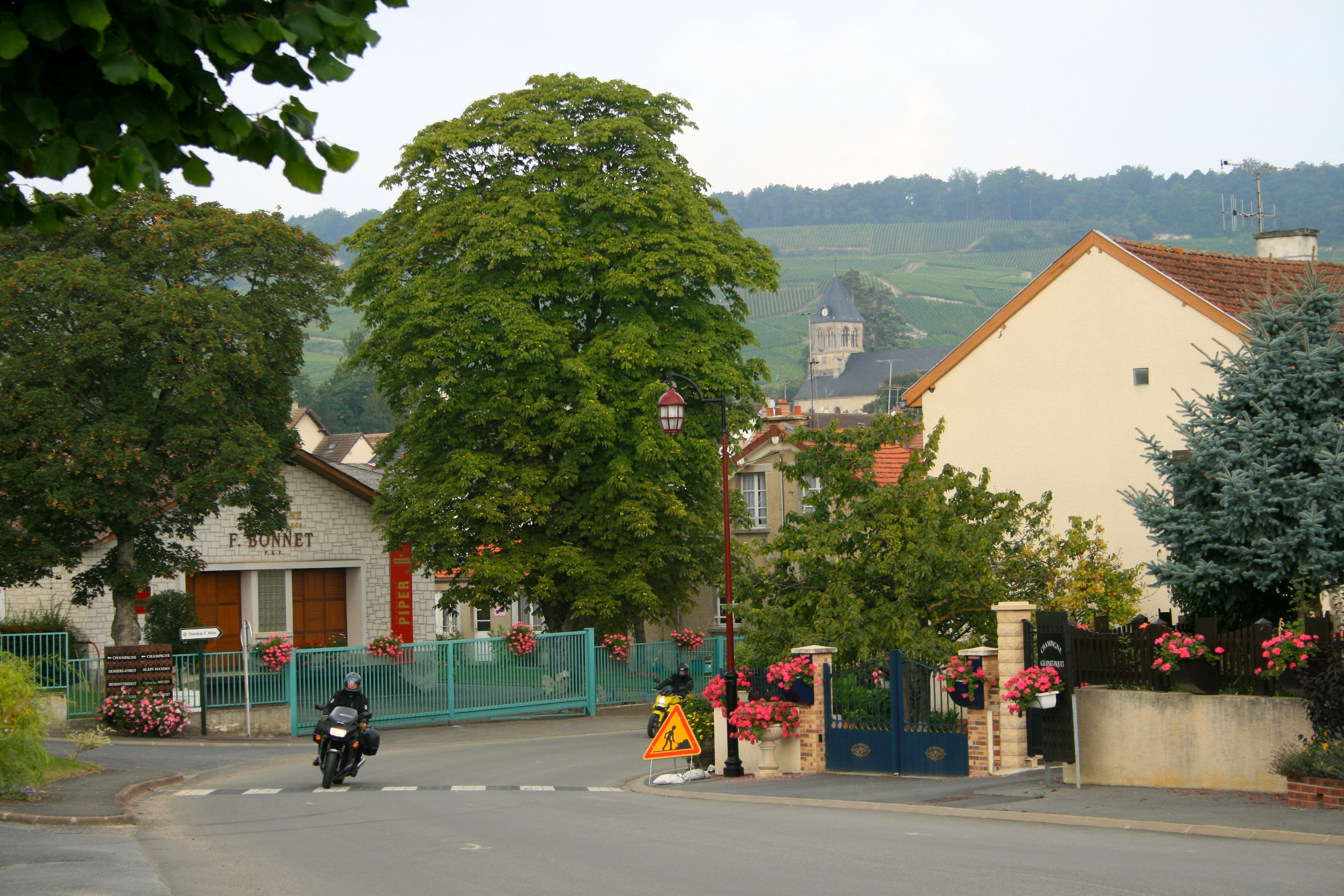
There are various ways to approach Champagne as a region. You can either base yourself in one of the main cities and then go for a day trip outside the cities or else you can try to stay in an idyllic village though risk not having amenities closeby.
There are three main areas to discover. There is Reims and its surroundings also known as Montaigne des Reims, there is Epernay and the Marne Valley with the famous Cote des Blancs which specialises in champagne made solely from the Chardonnay grape. Then there is the Aube, further south.

The scenery in Champagne is always pleasing. Hautvillers, the home of Dom Perignon (who discovered the famous champagne method to make sparkling wine) is a very scenic village with picturesque houses and amazing views. The small champagne house Champagne G. Tribaut is not only worth visiting for its wines but also for the splendid views from its terrace. On a nice summer day, you might be able to taste their champagnes on a terrace overlooking vineyards. It is worth keeping in mind when you are visiting the region that most small champagne houses are closed on Sunday.

In Hautvillers you can also sit and laze in the main cafe in the centre, the Cafe d’Hautvillers or else head to a splendid wine bar and shop Au 36 where you can either buy a great range of champagnes, taste wines and eat.

Another favourite village of ours is Oger in the Cote des Blancs. Getting to the Cote des Blancs is firstly very scenic. Oger is home to one of my favourite small champagne houses Jean Milan.
Apart from the small villages, you would do well to visit the main cities of Champagne. These are Reims, Epernay, Chalon en Champagne and Troyes.
Reims is easily reachable from Paris and Brussels. The architecture in these cities is stunning, the cathedrals, as you can expect in this part of Europe beautiful. If you have time to visit only one champagne house, make it Pommery. Its chalk cellars are stunning as is the estate.
There is a big difference between Reims and Epernay. In order to visit a few of the major champagne houses in Reims you will need a car because the avenue which houses these wineries is huge. On the other hand, most of the champagne houses in Epernay can be found on probably the most spectacular street in the whole of Champagne. This is the Avenue de Champagne which houses some of the most impressive estates in the regions. All the top champagne houses of Epernay are within an area of less than a kilometre and the estates such as the one below are stunning.

In future blogposts I will give you tips on what to do and see in Champagne and its surroundings as well as a review of some of my favourite small Champagne producers.
 Cooking is a passion but on a daily basis it can sometimes become difficult especially when you try to juggle with 100 things.
Quick midweek recipes, or those which you can prepare quickly while retaining the wow factor are therefore always winners.
This recipe is great because it can easily be prepared in less than 30 minutes. With its bold flavours it is both good as a quick midweek supper and also fit to be served if you are hosting.
Guinea fowl is one of my new favourites given I can find it pretty easily at my local butcher. I hope you try this recipe because it is really easy to make and also delicious.
Guinea Fowl with chickpeas and olives (Serves 4)
Ingredients
Method
1. Season the guinea fowl breasts. Add the olive oil and butter to a pan and toss in the rosemary.
2. Pan fry the guinea fowl breasts. It should take around 7 minutes on each side for the guinea fowl to be cooked through.
3. Remove the guinea fowl from the pan. (At this stage, I normally put in a warm plate, cover with aluminium foil and place in the oven at a very low temperature (around 80 to 100C). You should also remove the rosemary at this stage.
4. Deglaze the pan by adding the Madeira or Marsala. Add garlic and anchovies and let the latter dissolve by mixing gently. Then throw in the chickpeas and olives and cook for a few minutes until warm and slightly caramelised.
5. Place the guinea fowl back into the pan and add the fresh basil and serve with the cooking sauces.
Wine suggestion: Being summer, I would opt for a white wine or else a light red wine. A creamy Chardonnay from Burgundy would work very well with this dish. It would also work very well with a red wine like Barbera or Nebbiolo from Italy.
There was a sense of disappointment in our family when Giovanni on Chaussee de Vleurgat closed a few years ago. When we arrived in Brussels nearly nine years ago, it was not only close to home but it also served one of the best Italian espressos or cappuccinos you could find in Brussels. Moreover, the cannoli (which we are so accustomed too in Malta) were to die for.
Now either my palate has become accustomed to ‘worse’ coffee or else the Belgian coffee scene has clearly made remarkable improvements. I tend to believe that it is more the latter than the former.
Italian food is clearly comfort food but Lebanese food can be exceptional particularly when using fresh ingredients. I can today say that his replacement has proved himself on many occasions over the past years.
O Liban is a great place to stop for a quick lunch or dinner. It is also perfect to grab a take-away or to try one of their delicious typical Lebanese ‘sandwiches’ or pittas. They are all excellent using fresh ingredients, excellent sauces like the garlic sauce or hummus. They are so good that you might develop a craving for them. Whenever I am in the area of Bascule at lunch time, I nearly always end up going to grab a sandwich from there. My favourites are the lamb kefta, chicken and the falafel.
Hummus (better known as a chickpea dip) can easily be made at home or bought from a supermarket or speciality shop. Nevertheless, the test for a Lebanese restaurant is to make hummus taste special. O Liban passes this test with flying colours.
This is also an excellent place if you are vegetarian. Among the lunch or dinner options, you can put together a plate of your choice with some of the dishes that are ready prepared and which you can either eat at the restaurant or else take home. The meat option includes a choice of meat as well as six vegetable dishes or salads while the vegetarian option (also excellent for non vegetarians) gives you an option for eight different choices. You can of course include the excellent hummus as well as the Moutabal which is an incredibly tasty aubergine dip.
O Liban is great for a quick lunch or dinner. It is always busy which is a guarantee for fresh ingredients and salads. Service is extremely good though at times when it gets extremely busy might be a bit slow at the start.
If you are craving Mediterranean food and looking for something quick, comforting and good, O Liban on Chaussee de Vleurgat is a great choice.
If you have never tried Lebanese wine, this is also your chance to try it. We have always tried the ground floor snack and ‘traiteur’ though there is a restaurant on the first floor which also serves interesting set menus.
Verdict: If you develop a craving for their ‘sandwiches’ using the typical Lebanese flat bread do not blame me. They are that good. Among their vegetable choices, you need to try the hummus, moutabal and the ‘moussaka’. This Lebanese version is a stew of aubergine, chickpeas and tomatoes and is incredibly tasty. Go there for a quick takeaway or else for a casual lunch or dinner. You will not be disappointed.
O Liban is open everyday (closed in the evenings on Sunday and Monday). He can be found at Chaussée de Vleurgat 324, close to La Bascule.
 Ivan Brincat