What is happening to French restaurants?

IMG_0436
Is it possible that three out of four restaurants in France are serving food prepared elsewhere?

There is no question, at least at the high end of the restaurant scene that the French are still at the top of the culinary world although the competition has become incredibly fierce with countries like Spain, Italy, the UK (yes you read that correctly) and Japan challenging for the top position.

But amid that reputation is a creepy feeling that not all is rosy. While the top chefs can command huge international respect for their creations, you need to sit and wonder at what is happening in the more traditional ‘bistros’ and ‘brasseries’. That feeling is more pertinent when you learn that France is introducing a law that will force restaurants to mark their food as ‘fait maison’ or home made to save their culinary reputation.

When this happens you realise that things are not always as they seem. As you can see from this article in The Guardian, many mid-range restaurants are using industrial companies as a way to cut costs and serve customers food that has been prepared elsewhere. We are not speaking here of canteens or fast food places but restaurants around France. The report says It is difficult to estimate what percentage are doing so but it could vary from 30% to three quarters of restaurants.

If you think about it this is incredible though it might be noticeable to the discerning eye particularly since ‘the classic dishes’ seem to be replicated in many places with similar results irrespective of the region of France you are in.
IMG_1404
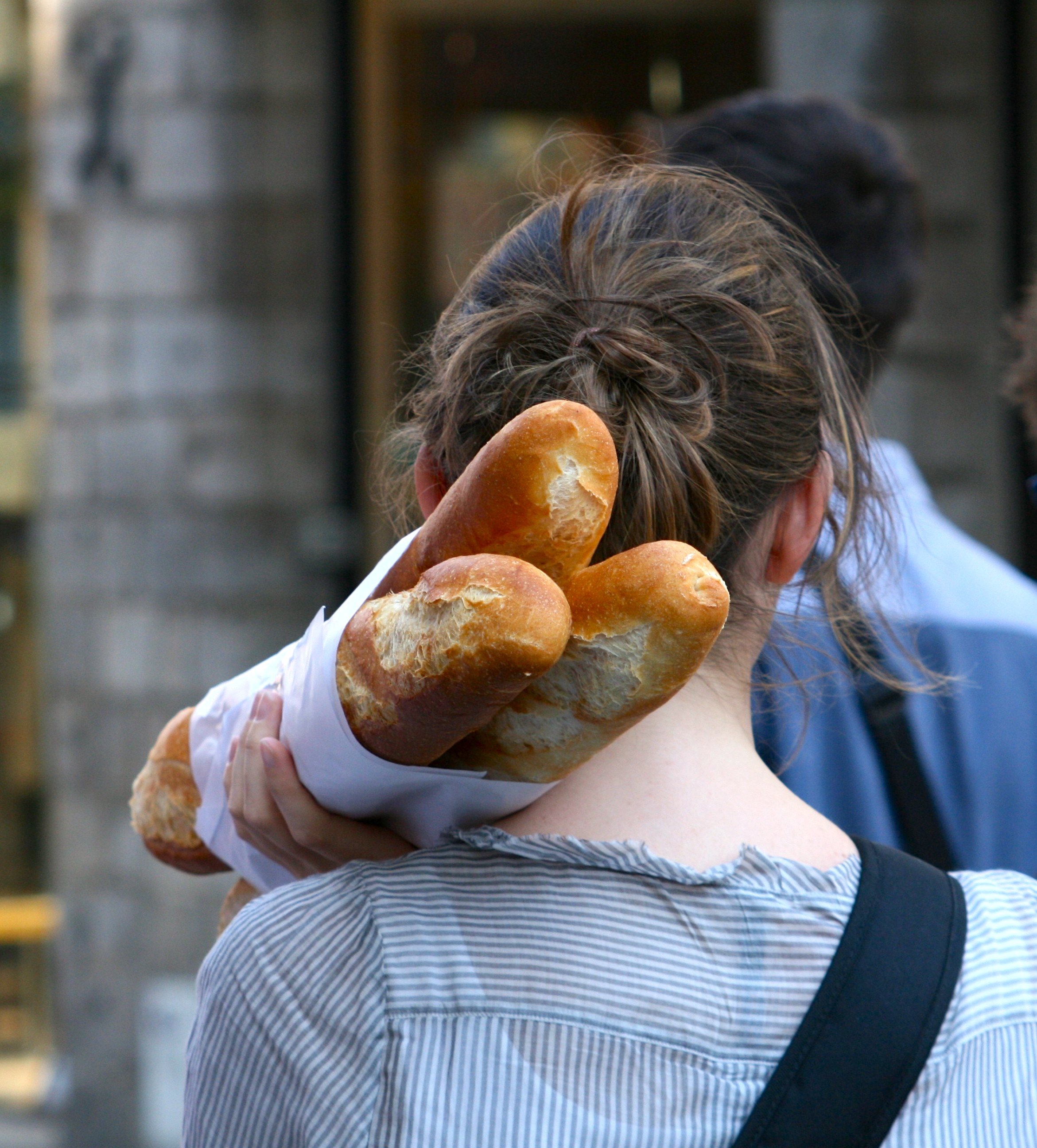
Is it best to stick to baguettes?

I could realise something was going wrong with French cooking on a combined trip to Tuscany in Italy and Provence in France a few years ago. The reputation of these two regions is very high. But on balance, it was clear that there was no contest between the overall quality of food in Tuscan restaurants when compared to those in Provence. Don’t get me wrong, we still ate very well in Provence in certain restaurants but at the lower end, i.e. in the osterias and trattorias in the Chianti area of Tuscany there was very little chance of going wrong. Stop at any restaurant, sometimes, even a bar in a 500 people village and the chances of going wrong were close to zero. There was no need for guides or advice from locals. The reason is that at its core Italian food is simpler to French cooking because the focus is always on the quality of the ingredients and not the sauces or the complexity of the preparation required.

We also ate very well in the beautiful villages of Provence, the search for a good place was more painstaking and required considerably more research. We noticed, quite easily that the chances of going wrong were higher and to eat well you needed to spend considerably more than in Tuscany.

The question people are asking is whether this law will work. It is difficult to assess particularly in view of the fact that ‘fait maison’ might not necessarily always be better. But clearly, it should inspire people to vote with their feet. Let’s hope it works for the sake of the French culinary reputation.
The real Neapolitan pizza

20140716-232117-84077729.jpgPizza is taken very seriously in Campania and especially in Naples and its surrounding areas. The reasons are rather obvious. The area is known for its San Marzano tomatoes which are renowned for their exceptional quality particularly for making tomato sauce and for the Mozzarella di Bufala made from milk from water buffalo raised in the marshlands of Campania.

No one really knows where pizza originated from  but the ‘Napolitani’ claim to be those that have invented the pizza we are so accustomed to eating nowadays in many pizzerias worldwide.

20140716-232118-84078259.jpgMaarten Van Steen of Villa Bardon in Gent which serves Mediterranean cuisine has just come back from a two week course organised by the Associazione Vera Pizza Napolitana to learn the secrets to making a good pizza. This afternoon we tasted the results of this two week course and the result was extremely successful.

Here he shares the secrets of what he has learned in the two weeks he stayed in the world’s pizza capital.

It might sound obvious but there are a few secrets to making good pizza. The first is the dough. This is made with water, flour (in Italy the use the 00 type) salt and yeast. You need to let it rest for around two hours, following which you shape it into balls which are left to ferment even overnight in a cool environment. This adds to the complexity of flavour.

The other secret is the ingredients on top of the pizza. In Campania they use crushed San Marzano tomatoes to make tomato sauce as the base for the pizza. The mozzarella is the other key ingredient. Here, unfortunately, it is not easy to replicate given that it is extremely difficult if not impossible to find a good mozzarella that has been produced on that same day. In the South of Italy, mozzarella is taken very seriously and many will make sure that they use one which had been just prepared on the day. Maarten says the best mozzarella he has ever tasted came from a visit to the farm where it had just been produced. I can vouch for such mozzarella from our visit to Campania a few years ago.

The real pizza Napolitana uses just tomatoes, mozzarella, basil and a drizzle of good extra virgin olive oil. When the ingredients are good, simplicity is key.

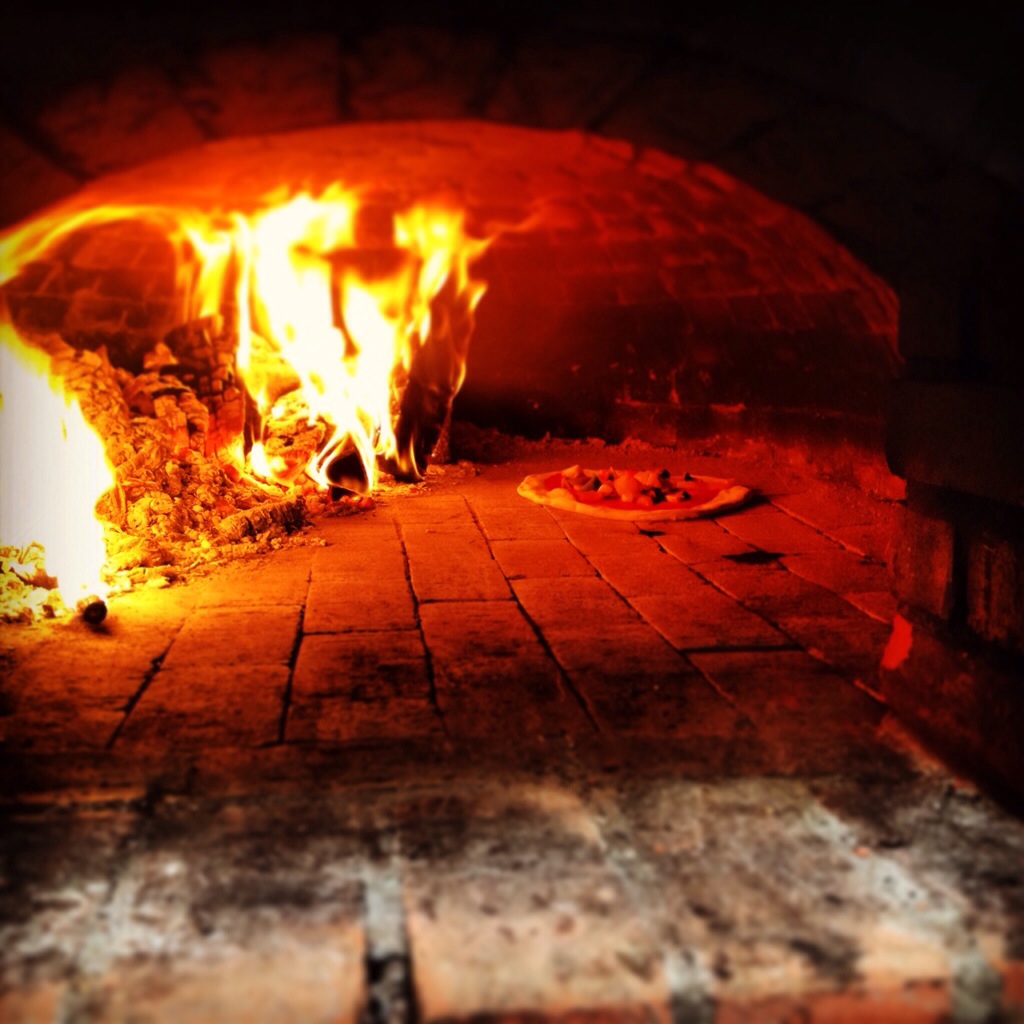
Maarten says another key element of making good pizza is to have the right oven. A stone oven is obviously essential but he was also in pizzerias which made use of gas ovens (albeit with a flame). He says the results are not the same but come close.

You obviously need to open the dough well. Here the secret is not to throw the dough into the air. This is a gimmick and not the way the Associazione teaches upcoming pizzaiolos.

He had his fair share of pizzas but he says one of the things which surprised him most was a ‘fried’ pizza calzone stuffed with ricotta and pancetta among others which was sensational. He tried this at Pizzeria Di Matteo, which is a very famous pizzeria in one of the narrow streets of Naples.

Many associate the Pizza Marinara with seafood. However, in Campania, the Pizza Marinara is the simplest pizza you can have. It is just a pizza with tomatoes and garlic and has no mozzarella.

For the time being, Maarten will perfect the art of making pizza on his days off from the restaurant. As he says, the two week course in Naples adds to his cooking experiences. Who knows, we might be able to try his pizzas in Gent sometime in future.


The wines of Sicily – a wine region like no other

The fishing village of Scoglitti which believe it or not triggered my passion for Sicilian wines

Maybe it is because of Malta’s close affinity to Sicily, or because of the fact that I have been there so many times, but I find Sicilian wines to be extremely interesting. True, they might not compare with the finesse of Barolo’s from Piemonte or Brunello di Montalcino from Tuscany but still they are extremely fascinating.

Sicilian cuisine to me epitomises what is best about Mediterranean food. Take simple, sometimes humble ingredients and within minutes you have the makings of a great meal. Like my home country, Sicily is a hotpot of different influences from the Mediterranean. Some of the most memorable meals I have experienced were in Sicily whether it was a menu free restaurant in Scoglitti serving just one fish dish after another of what their fishermen had caught earlier in the day, to some of the best pasta creations. Nothing beats their spaghetti with sea urchins or pasta with prawns and pine nuts or pistachios which are so common in Sicilian cuisine.

But this post is not about Sicilian food but rather about its wines. Sicily came rather late to the wine connoisseurs attention and for various reasons. For many years, Sicilian wine producers made wine which were transported to the North of Italy to be blended with other more well known wines. There were also a few large producers who mainly focused on quantity rather than quality.

But a handful of winemakers, also spotting the potential of this island, decided to take matters into their hands starting from the 1990s and began to make their own wines under their own labels. This has led to a major reversal of fortunes and many now consider Sicily to be one of the most interesting wine regions in Italy.

Some winemakers like Cusumano call Sicily a continent because of so many terroirs that this island has to offer. The variety of wine styles that have emerged in recent years ensures that this may indeed be the case.

There are parts of Sicily which are further South from Tunisia and therefore extremely hot for wine making. Nevertheless, the wines produced, despite their intensity also have the right amount of acidity which makes for balanced wines when aged well. I can assure you that a 10 year old Nero d’Avola can give you as much pleasure as more renowned wines.

The Nero d’ Avola is the most well-known grape from Sicily and it originally comes from South-East Sicily (Avola) close to Pachino which is world famous for the cherry tomato variety of that name. Nowadays, Nero D’Avola is grown pretty much across the whole island.

Then there are wines from higher altitudes or those from the volcanic region of Etna which offer great examples of the potential that wines from volcanic regions have. Here, the most interesting grape is the Nerello Mascalese which is traditionally grown on the slopes of Mount Etna. The wines from the Etna have an exceptional minerality mainly because of the volcanic soil.  One of my long time favourites from this area are the wines from the long established Benanti. Many Sicilian wine makers have now invested in this area including Tasca d’Almerita, Cusumano and Firriato. One of the most innovative in the Etna region is Belgian winemaker Frank Cornelissen who has established himself with his natural wines which use no sulphur whatsoever. His are considered to be cult wines.

The main white grape variety of Sicily is the Insolia which is a very fruity wine but when well made has great balance in terms of fruit and acidity. It also blends well with international varieties such as Chardonnay.

The first time I discovered Sicilian wines was thanks to a passionate wine lover who had a great Enoteca in the small fishing village of Scoglitti. He had a small but very interesting selection of wines in his enoteca. He guided me years ago to some of the best winemakers the island had. My fascination with Sicilian wines grew from there.

Among my favourite winemakers are Benanti, Cusumano, Morgante, Firriato, Tasca d’Almerita, Ceuso and Planeta. I will write about these and many more wine producers in future blogposts. There are many other winemakers worthy of a mention. So watch this space for more blogposts in future.

But if you find any one of the Sicilian wines from the above producers try them out. You will not be disappointed. One tip: Sicilian wines in comparison to wines of similar quality are cheaper so I would recommend that you try to acquire the higher end wines. You can find exceptional quality for wines between 10 Euros and 30 Euros.

Among my long time favourites are Cusumano’s Noa, a blend of Nero d’Avola, Cabernet Sauvignon and Merlot, Cusumano’s Sagana, 100 per cent Nero d’Avola, Rosso del Conte from Tasca d’Almerita, the Nero d’Avola from Morgante, Harmonium from Firriato and the Pietramarina from Benanti.

Siciliy is also home to one of my favourite ever wine shops, the Enoteca Picone. It has an amazing selection of wines from Sicily as well as many of the best Italian wines you can find elsewhere. If you are ever in Palermo, then this is a must visit.


Chateau de la Hulpe – a place for all seasons

OLYMPUS DIGITAL CAMERALiving in a city means that sometimes you feel the urge to get out and experience nature. It must have something to do with the fact that after 30 years living in Malta, even after nearly nine years in the Belgian capital, we still feel the urge to explore what Belgium and its neighbouring countries have to offer.

But when we run out of ideas or are too lazy to think, there is a place we turn to time and time again. Whether its winter, spring, summer or autumn, Chateau de la Hulpe and its surrounding land is a fantastic place to relax and enjoy peace and quiet.

The Domaine Solvay de la Hulpe extends across 227 hectares of greenery, woodland and ponds. It is a perfect place to go for a walk, to cycle, to take children for a picnic or to lose yourself in the serenity of this Natura 2000 side which is also considered as an important heritage site in Wallonia.

IMG_4841The Chateau is imposing but the lands are also impressive with every kind of vegetation and natural environment that can be found in this region.

You are likely to be impressed any season you go. One tip, if you want to avoid the crowds then go either during the week or else in the morning. Most people end up going there in the afternoons even though it still remains extremely pleasant.

Apart from the walks and nature, the grounds also house over five hundred works of famous Belgian artist Jean-Michel Folon. Just follow the signs to Folon Foundation and you will find the splendid collection in the farm of the castle of La Hulpe. There are more than forty years of his creations.

This is really an inspiring museum which I highly recommend visiting. Note it is closed on Mondays like most museums in Belgium.

Just outside the museum is a bistro with the most amazing views of uninterrupted countryside. However, don’t expect to eat well here. The choice on the menu is very limited. But if you head there after lunch and are lucky to have gone on a nice day, then you can sit on the terrace and have a superb view while enjoying a Belgian beer or coffee.

If you want to eat somewhere close then follow this link to my blog post on Lac to Genval.


One of the 50 places to visit in Europe is in the Island of Gozo

IMG_6300
The Azure window in Gozo – one of the places to visit in your lifetime.

I haven’t really written about my home country yet, that will come at a later stage but I wanted to highlight one idyllic spot which has been earmarked by the website Business Insider as one of the fifty places to visit in your lifetime.


The Azure Window as it is known is indeed stunning and worthy of the recommendation. Make sure to visit sooner rather than later because the arch is suffering the effects of weathering


Does anyone really care about tourist traps?

IMG_6042One of the most famous streets in Brussels among tourists or people on business trips is the Rue de Bouchers. It can be found just a few metres away from the Grand Place.

Walking from the street at the Grand Place area last week on the evening when Belgium was playing against South Korea and locals were obviously nowhere near any restaurant without a television set, I could not help but wonder what makes people visit such restaurants around the world.

What are they looking for? Why would locals consider such places a tourist trap but so many have no qualms in sitting down and eating there. What is so attractive about waiters greeting you in all languages as they try to guess your nationality to try and get you in?

In the case of Brussels, are the mussels and fries served in such places so different in quality to restaurants which cater mainly for locals? Do the tourists who sit down to eat in such places care about the difference? Are they more interested in the experience of eating al fresco as the day gets longer as long as they sit and enjoy a glass of beer or wine? Is the location more important than quality?

What triggers such behaviour? Is it the wisdom of the crowds?

This is a common phenomenon not only in the city I know best. Tourist traps can be found pretty much in every city. The more tourists a city attracts the more you are likely to find such places. Take cities like Paris and London. They are among the top most culinary destinations but get it wrong and you are likely to end up being extremely disappointed.

Have you ever noticed how many times bars, restaurants and cafes in the best locations or with great views have the lousiest service? Is there a correlation between location and quality? Do places which cannot attract customers on the basis of location go the extra mile to please their customers for this reason? Are they more passionate about the food they serve, the provenance of their produce?

But for the many who frequent such places, does it really matter?